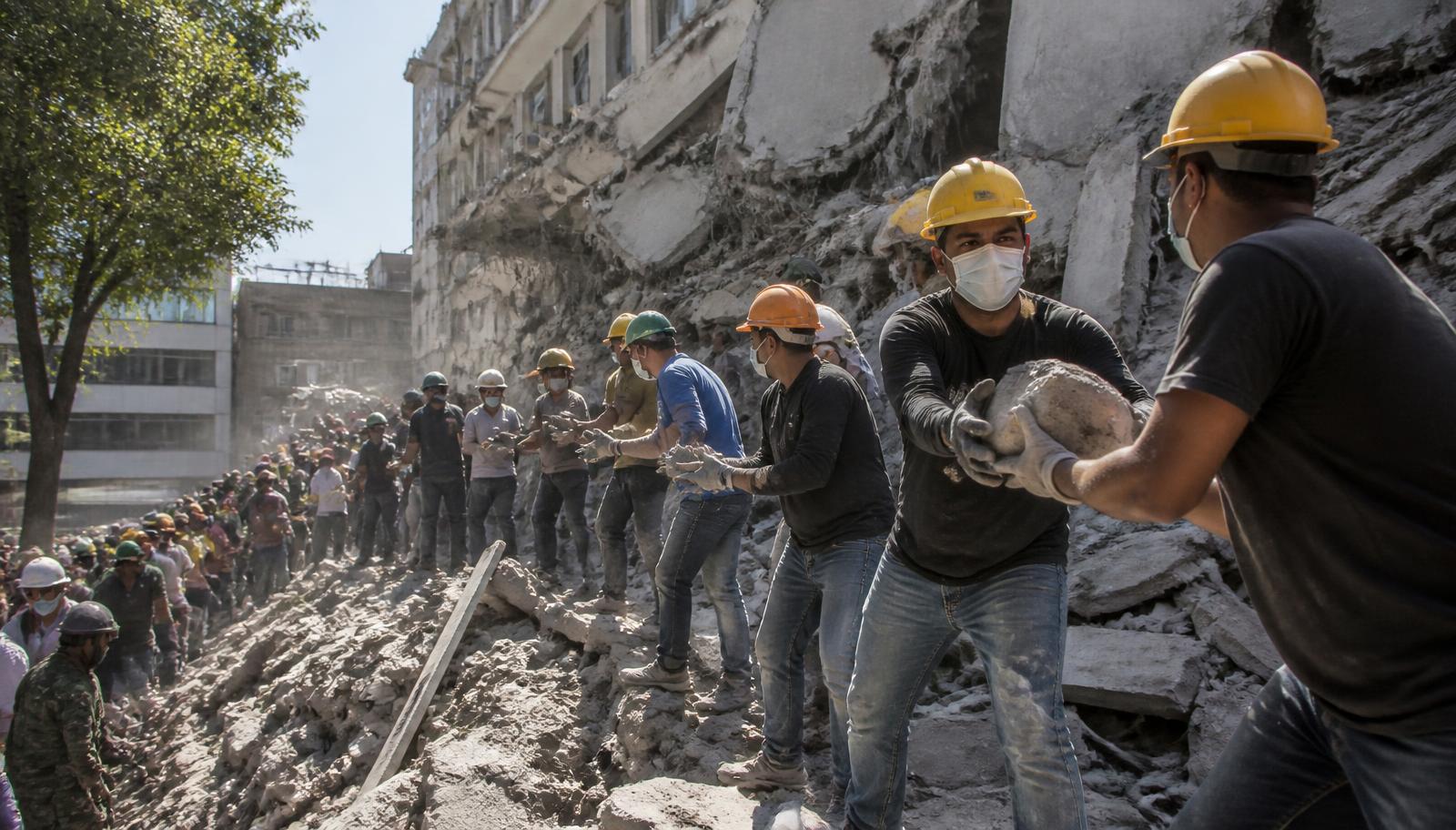
Ukraine's war changed shape again on Monday morning. A drone strike that lasted several hours hit the industrial city of Nizhnekamsk, more than 1,100 kilometres from the Ukrainian border, killing at least 13 people — one of them a child — and injuring 75 more, according to Russian officials. It is among the deadliest single attacks on Russian territory since Moscow launched its full-scale invasion.
The target, Ukraine's armed forces confirmed, was the Tanevo oil refinery. The Ukrainian defence manufacturer FirePoint said its FP-1 drones were used. Russia's Investigative Committee said residential areas were struck alongside industrial facilities. The head of the republic of Tatarstan, Rustam Minnikhanov, declared a period of mourning. "This is a tremendous pain for all of us," said Nizhnekamsk mayor Radmir Belayev.
Kyiv has not publicly commented on the civilian deaths. What it has done, steadily and with increasing precision over the past year, is turn Russia's refining industry into a front line that sits nowhere near the trenches.
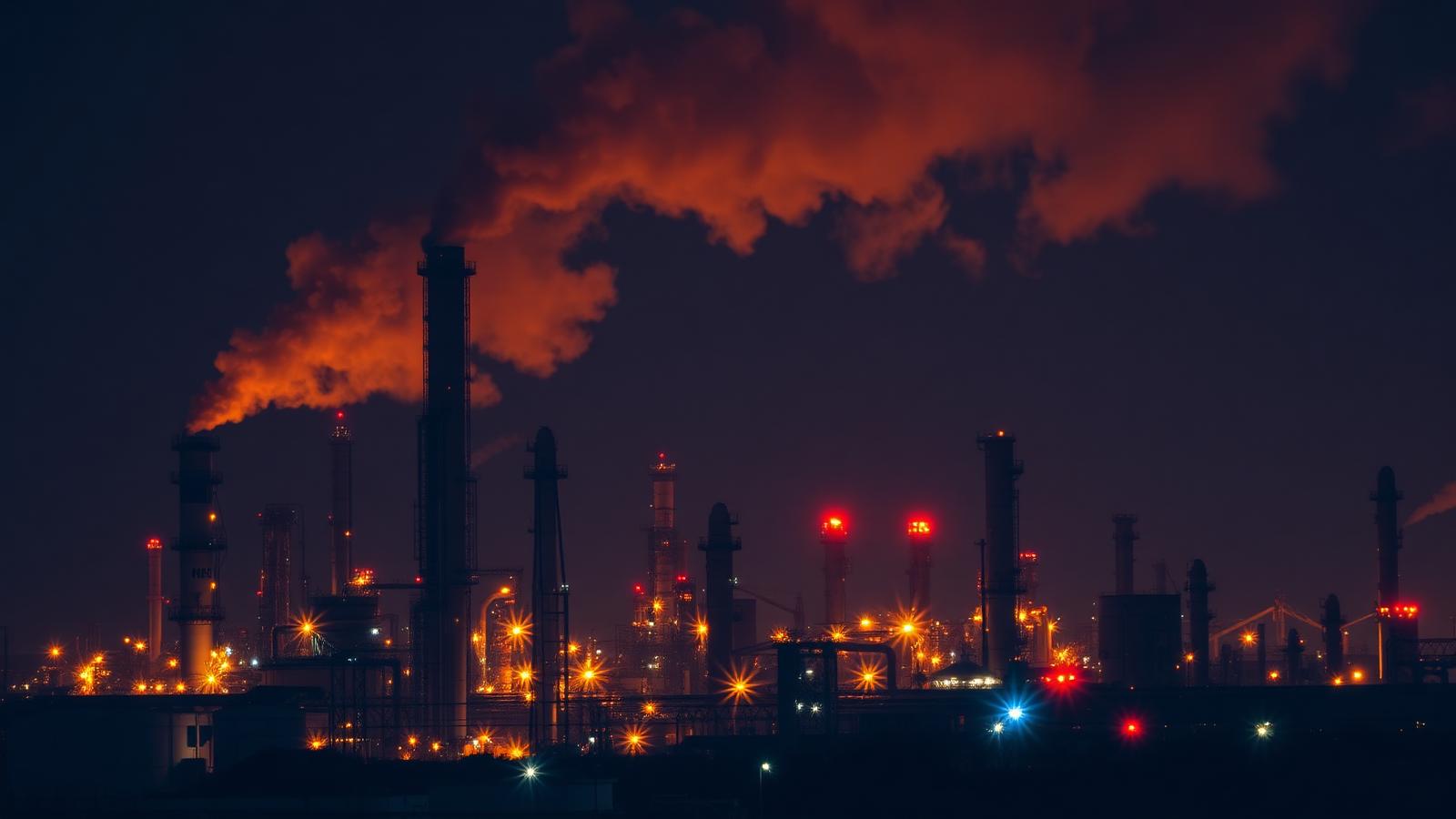
What happened in Nizhnekamsk
The strike unfolded overnight and continued into daylight hours, according to local accounts. Verified footage circulating on social media showed columns of smoke and flame rising above the city in daytime, with air raid sirens audible in the background. Russia's defence ministry said more than 450 Ukrainian drones were shot down across the country during the same period — a figure that, whatever its accuracy, signals the scale of the effort.
Nizhnekamsk is not an accidental target. It is one of Russia's petrochemical anchor cities, built around refining and polymer production, and Ukrainian forces struck refinery infrastructure there once already on 12 June. Monday's attack was heavier, longer and — critically — deadlier for civilians.
Three facts define the significance of the strike:
- Range. More than 1,100km from the border puts Tatarstan far beyond the reach of the artillery-and-glide-bomb war being fought in Donetsk and Zaporizhzhia. It is a strategic depth strike, not a battlefield one.
- Target class. Refineries are revenue infrastructure. Damaging them squeezes the fiscal base of the war rather than the frontline force.
- Casualty count. Thirteen dead, including a child, is a step change from the pattern of earlier deep strikes, which mostly produced industrial damage and few or no civilian deaths.
The same 24 hours saw the reverse flow continue: five people were killed overnight by Russian artillery in Kharkiv, near the front line, and last week a combined Russian drone and missile barrage on Kyiv killed 21. The exchange is asymmetric in method but no longer asymmetric in reach.
Why refineries became the target of choice
Russia's war economy runs on hydrocarbons, but crude alone is not the pressure point. Crude can be redirected to willing buyers. Refined product — diesel, petrol, jet fuel, bitumen, the feedstocks that keep an army and an economy moving — is far harder to substitute at short notice, because refining capacity is fixed, expensive and slow to repair when the specialist units inside it are damaged.
That gives long-range drones an unusual return on cost. An FP-1-class airframe is cheap relative to a cruise missile. A distillation column, a vacuum unit or a catalytic cracker is not. When a single hit forces a refinery into partial shutdown, the loss is measured in weeks of throughput, insurance complications, and diverted rail capacity to move fuel from unaffected regions.
| Pressure point | Effect of a successful strike | Recovery time |
|---|---|---|
| Primary distillation unit | Cuts total refinery throughput | Weeks to months |
| Catalytic cracking unit | Reduces high-value petrol yield | Months, if parts are sanctioned |
| Storage tank farm | Product loss and fire risk | Days to weeks |
| Rail loading rack | Bottlenecks distribution, not production | Days |
The strategic logic mirrors what economists call the "chokepoint" theory of coercion: apply pressure where substitution is slowest. It is the same logic playing out in very different industries — the same reasoning behind export controls on chip inputs that we examined in our report on the polysilicon tariff shock.

The civilian question Kyiv has not answered
Ukraine has built its international case on a straightforward distinction: Russia strikes cities, Ukraine strikes military and revenue infrastructure. Monday complicates that framing.
Russia's Investigative Committee said civilians "not involved in any military operations were present" in the affected areas. The BBC noted it has not independently verified that claim, and independent verification inside Tatarstan is close to impossible in practice. But the reported toll — 13 dead, a child among them, 75 injured — is high enough that it will feature in Russian diplomatic messaging for weeks, and it raises questions Kyiv's partners have been asking privately for months.
Refineries sit inside cities because that is where the workforce lives. Nizhnekamsk grew around its plants; residential blocks are minutes from the perimeter fence. A drone strike that continues for hours against a sprawling industrial site, in weather and light conditions that degrade guidance, carries a real probability of secondary damage. Whether that probability was accepted deliberately or reflects a technical failure is unknowable from outside, and both possibilities carry legal weight under the principle of proportionality set out in international humanitarian law.
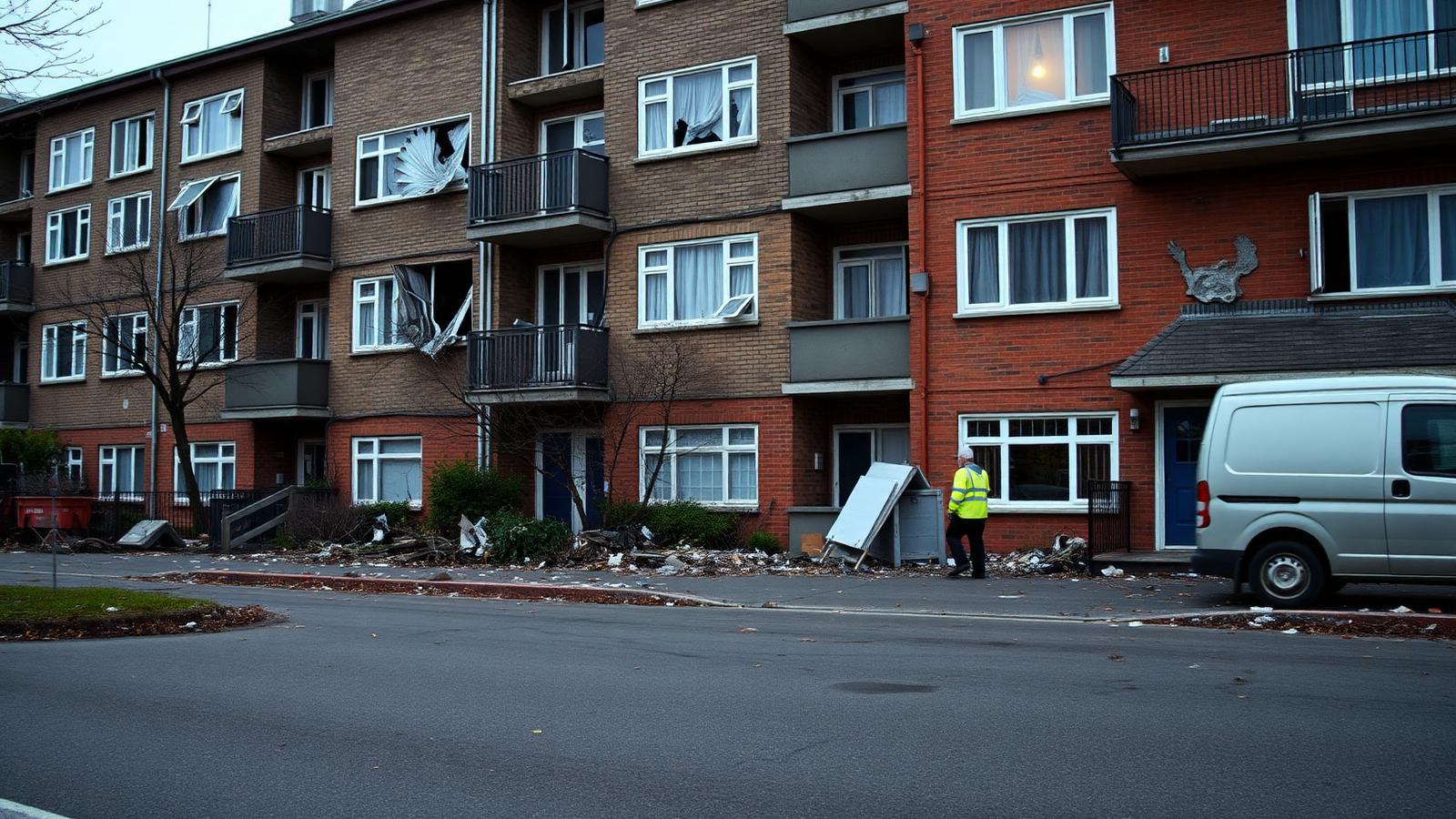
The escalation ladder nobody controls
There is a version of this war in which deep strikes act as a substitute for battlefield advance: Ukraine cannot break the line, so it attacks the economy behind it. There is another version in which each successful deep strike buys a retaliatory package aimed at Ukrainian cities, and the exchange ratchets upward with no negotiating mechanism attached.
The evidence so far points to the second. Consider the sequencing over the past week alone: a mass strike on Kyiv killing 21, artillery deaths in Kharkiv, drones over a German base days after the Leipzig incident, and now Nizhnekamsk. None of these events produced a diplomatic pause. Each produced a statement.
This is what an escalation ladder without rungs looks like. In Cold War theory, escalation was supposed to be legible — each step signalled intent and invited a response short of catastrophe. Drone warfare has stripped out the legibility. A strike 1,100km inside Russia does not obviously communicate a demand. It communicates capability.
Three ways this could develop
- Attrition equilibrium. Both sides keep striking infrastructure, both keep repairing, neither gains decisive advantage, and the war grinds on with a rising civilian toll on both sides of the border.
- Fuel crisis inside Russia. Enough refining capacity is degraded simultaneously that regional fuel rationing appears — historically a politically sensitive event in Russia, and the outcome Kyiv is presumably betting on.
- Widened target set. Russia responds by attacking Ukrainian energy generation ahead of winter, a pattern already established in earlier years of the war, with humanitarian consequences that dwarf refinery outages.
How deep-strike defence actually fails
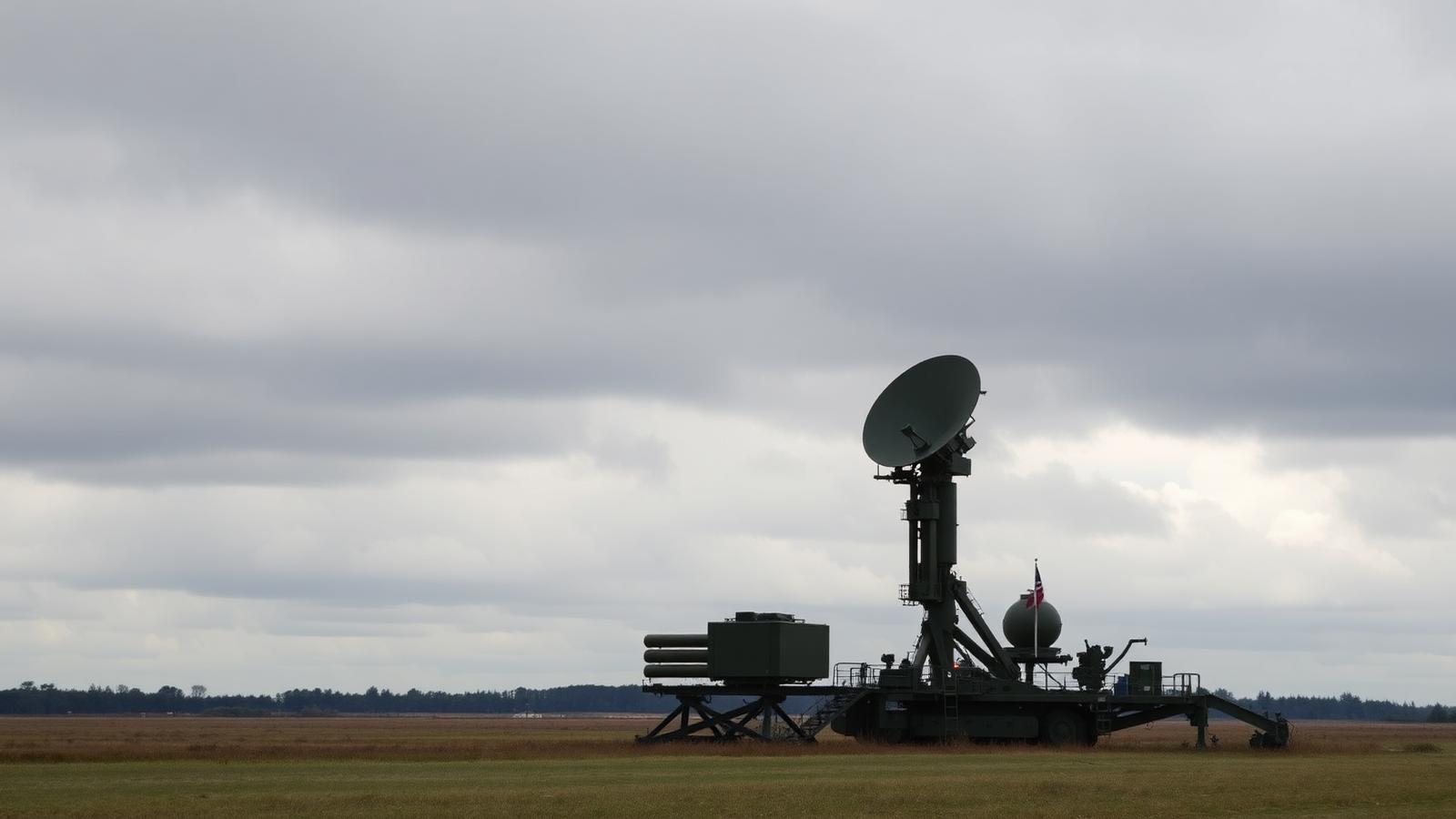
Russia's air defence network was designed around a different threat: high-value manned aircraft and ballistic or cruise missiles arriving on predictable vectors. Long-range one-way attack drones invert every assumption in that design.
They fly low and slow, which means terrain clutter hides them from long-range radar. They are small, which means their radar cross-section is comparable to a large bird. They are cheap, which means the economics of interception are perverse: a surface-to-air missile costing several hundred thousand dollars is a poor answer to an airframe costing tens of thousands, and firing two interceptors per drone is worse. And they arrive in numbers, which saturates the decision-making capacity of a defence crew long before it saturates their magazine.
The practical result is a defence architecture that performs well statistically and badly locally. Moscow's claim that more than 450 drones were shot down overnight may be true and still be consistent with a devastating hit, because deep-strike campaigns are not attempting a high success rate. They are attempting a sufficient one. If nine in ten airframes are destroyed, the tenth still reaches a distillation column.
This is why the countermeasure trend across the region has moved away from missiles and towards cheaper layers: gun-based close-in systems, electronic warfare that attacks satellite navigation, tethered detection balloons, and physical hardening of the specific plant units that are hardest to replace. None of it is glamorous. All of it is a tacit admission that intercepting every airframe is not achievable.
What it means for oil, fuel and prices
Markets have learned to read these strikes carefully rather than dramatically. A refinery hit does not remove crude from the world; it removes refining capacity from one country. The effects show up in three places, in order of speed:
- Domestic Russian fuel supply. Regional shortages, informal rationing at forecourts, and rail rerouting. Fast, visible, politically awkward.
- Diesel and jet crack spreads. If enough capacity is offline, refined-product margins rise globally, because product is a genuinely traded market.
- Crude flows. Counter-intuitively, damaged refining can push more crude into export markets, softening rather than raising crude benchmarks.
For readers outside the region, the practical channel is diesel — the fuel that moves freight and therefore prices in almost every consumer basket. That transmission mechanism is the same one we traced in our analysis of how global trade rewiring reaches your shopping bill, and it is why energy analysts watch product cracks rather than headline crude when infrastructure is struck.
Ratings and forecasting bodies have consistently warned that Russia's fiscal position depends less on the oil price than on the volume it can process and sell. Data on Russian export volumes and revenue is tracked publicly by the International Energy Agency, whose monthly reporting has become one of the few reliable outside windows on the effect of the strike campaign.
The information war around the strike
Within hours of the attack, two competing narratives were fully formed. Russian state channels emphasised civilian deaths and a period of mourning. Ukrainian channels emphasised the refinery hit and the drone manufacturer's confirmation. Neither is untrue; both are curated.
What is new is how quickly synthetic material now enters the gap. Elsewhere this week, Chinese authorities detained two men for circulating a fabricated AI video and misleadingly re-edited storm footage during Typhoon Dolphin. The same toolkit is available in a war zone, and verified footage — geolocated, cross-referenced, timestamped — is now a scarce resource rather than a default one. Readers assessing claims from either side should look for verification methodology, not confident captions.
What to watch next
- Whether Kyiv acknowledges the strike. Silence on a hit this large is itself a signal about how the civilian toll is being handled internally.
- Damage assessment at Tanevo. Satellite imagery over the coming days will show whether primary units or peripheral infrastructure took the damage.
- Russian retaliation package. The pattern suggests a mass strike on Ukrainian urban or energy targets within days.
- Regional fuel data inside Russia. Forecourt shortages in Tatarstan or neighbouring regions would indicate the strike achieved its economic aim.
- Partner-country reaction. European and US statements will reveal whether the civilian deaths change any part of the support calculus.
Frequently asked questions
How far inside Russia was the strike? Nizhnekamsk is more than 1,100km (about 680 miles) from the Ukrainian border, deep in the republic of Tatarstan.
What was hit? Ukraine's armed forces confirmed the Tanevo oil refinery was struck. Russian authorities said residential areas were also affected.
How many people were killed? Russian officials reported at least 13 dead, including one child, and 75 injured. Independent verification inside Tatarstan is limited.
Why does Ukraine target refineries rather than oil fields? Refining capacity is expensive, fixed and slow to repair, and refined fuel is much harder to substitute quickly than crude oil.
Does this affect global oil prices? Usually more in refined products such as diesel than in crude benchmarks. Damaged refining can even increase crude exports.
Was this the first strike on Nizhnekamsk? No. Ukrainian forces struck refinery infrastructure in the city on 12 June, but Monday's attack was substantially larger.
Protunez will continue tracking the deep-strike campaign, the damage assessments that follow it, and the retaliation cycle it sets in motion. Our related coverage includes the negotiations reshaping the global order and the Mecca Pact reshaping defence commitments in the Gulf.