Nvidia announced on Monday 10 August 2026 that it has signed memorandums of understanding with six of the largest names in global finance — Apollo, BlackRock, Blackstone, Brookfield, Goldman Sachs and KKR — to establish compute financing platforms intended to mobilise more than $500 billion of third-party capital for AI infrastructure.
Read that sentence again slowly, because the important word is not $500 billion. It is third-party.
Nvidia is not spending this money. It is not lending it. It is arranging for other people's capital — pension money, insurance money, sovereign wealth, private credit funds — to buy the data centres, the power connections and the racks of accelerators that its customers will then rent. In the company's own framing, Nvidia compute becomes "an investable asset — one which provides the lowest token cost, highest revenue and longest life."
Nvidia's shares fell on the news. That reaction is the story worth understanding.
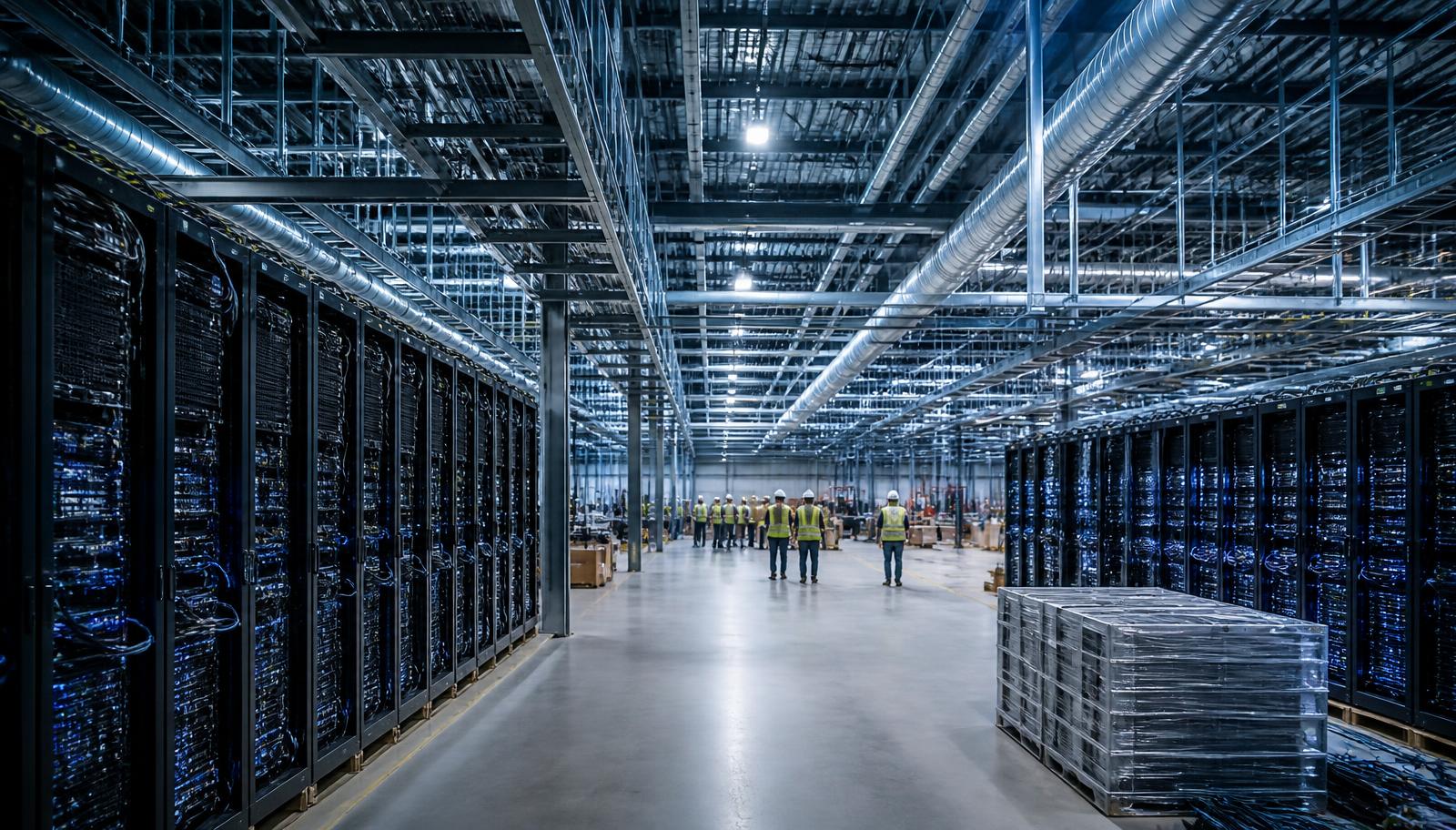
What was actually announced
The structure, as described in the announcement carried by partners including KKR, is a set of independent financing platforms. Nvidia works with each institution to create "dedicated pools of capital at significant scale at attractive rates for NVIDIA customers." The platforms are aimed at frontier AI labs, enterprises and the fast-growing tier of specialist AI clouds — the companies that buy GPUs by the tens of thousands but do not have Microsoft's or Amazon's balance sheet.
Three features distinguish this from ordinary vendor financing:
- The capital is external. These are third-party pools, not Nvidia's cash. The intent is explicitly to broaden access rather than to concentrate risk on Nvidia's own balance sheet.
- The revenue is usage-linked and long-duration. The pitch to investors is a stream of payments tied to compute consumption over the life of the hardware, which is the shape institutional allocators want: infrastructure-like, contracted, long-dated.
- It is standardisation, not a single deal. MoUs with six institutions at once is an attempt to create a category — a repeatable asset class with comparable terms — rather than a bespoke transaction.
This follows a pattern Nvidia has been building for a year: backing OpenAI's data-centre needs, active participation in the bond market to support AI ventures, and a $500-billion-plus initiative with SK Group announced in July that includes a two-gigawatt AI factory in Korea using the Vera Rubin platform and SK hynix HBM4 memory. The financing platforms are the logical next step: having built the demand and the supply chain, Nvidia is now building the capital markets plumbing.
Why the shares fell
Markets did not read this as a demand signal. They read it as a financing signal — and the two look identical only until you ask who absorbs the loss.
An accelerator sale for cash is a clean transaction. Nvidia's risk ends at delivery. When the same accelerator is instead bought by a special-purpose vehicle funded by private credit and leased to a customer whose revenue depends on continued AI adoption, the risk does not disappear. It moves, and it lengthens. The chip is now collateral for a loan whose repayment depends on demand for the chip.
Three specific worries sit behind the share price reaction:
Vendor-adjacent financing looks like pulled-forward revenue. Investors have seen this structure before, most memorably in telecoms equipment before 2001, where vendors helped fund the customers who bought their kit. The mechanism is not fraudulent and often makes economic sense. But it reliably makes reported demand look stronger than underlying demand, and it makes the eventual correction sharper.
Nobody has published the offtake terms. As one report on the announcement noted bluntly, nobody has yet said what the money buys, or who absorbs the loss if demand disappoints. Are the compute contracts take-or-pay? What residual value is assumed for a three-year-old accelerator? Those two numbers determine whether this is infrastructure debt or venture risk dressed as infrastructure debt.
Depreciation is the whole argument. Nvidia's claim that its compute has the "longest life" is doing enormous work here. Traditional infrastructure assets — pipelines, toll roads, transmission lines — are financeable over 25 years because they still function in year 24. A GPU generation is commercially competitive for perhaps three to five years before a successor changes the cost-per-token maths. Any financing structure amortised over a longer horizon than the hardware's competitive life is making an implicit bet that inference demand grows faster than performance improves.
| Question | What was disclosed | Why it matters |
|---|---|---|
| Size of capital | Over $500bn, third-party, "over time" | Mobilisation target, not committed spend |
| Structure | MoUs for independent financing platforms | Non-binding; terms still to be set |
| Who bears demand risk | Not specified | The single most important unknown |
| Assumed asset life | Framed as "longest life" | Determines amortisation and residual value |
| Offtake commitments | Not specified | Take-or-pay versus usage-only changes everything |
The energy constraint nobody can finance away
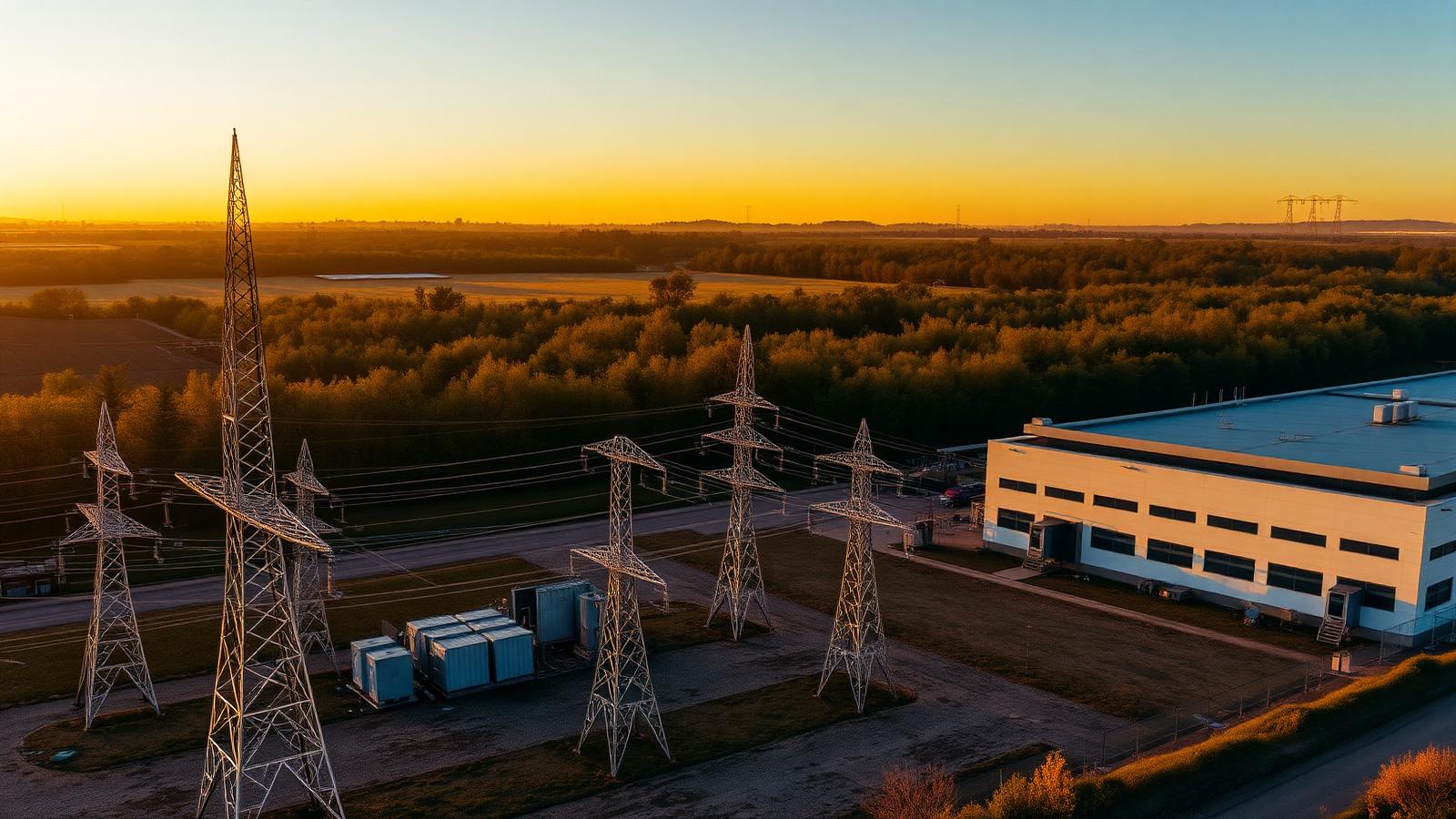
The binding constraint on AI buildout in 2026 is not capital and has not been silicon for some time. It is interconnection: the queue for grid connection, the lead time on high-voltage transformers, the availability of firm power in the specific places where fibre and land and cooling water coexist.
Money accelerates the parts of this that money can accelerate. It can pay for on-site generation, for battery storage, for co-located gas turbines, for grid upgrades the utility would otherwise defer. It cannot compress a transformer order book or a transmission permitting process. This is why several of the six institutions involved — Brookfield and Blackstone in particular — are as much energy infrastructure investors as they are private equity houses. Their presence signals that the platforms are expected to buy power assets alongside compute.
For readers outside the industry, the practical implication is local. The AI buildout increasingly competes with households and existing industry for the same electricity, in the same regional markets, on the same wires. Where that competition is unmanaged, it shows up as rising retail power prices and contested planning decisions long before it shows up in a technology company's earnings.
Who actually benefits
Strip away the framing and the beneficiaries are reasonably clear.
Mid-tier AI clouds and frontier labs benefit most directly. Access to capital at "attractive rates" against compute as collateral is the difference between deploying 5,000 accelerators and 50,000. It compresses the advantage of the hyperscalers, whose real moat has always been the ability to fund enormous capital programmes from operating cash flow.
The six institutions get a new, large, fee-generating asset class at a moment when traditional private equity exits are slow and private credit is hunting for scale. A compute financing platform with usage-linked cashflows is an unusually attractive product to sell to insurers and pension funds hungry for long-duration yield.
Nvidia gets demand it does not have to fund, a broader ecosystem locked into CUDA, and — crucially — customers whose purchasing is no longer capped by their own balance sheets. Its hardware revenue and its software adoption both benefit.
The unresolved question is savers. The end holders of this paper will be pension funds and insurers, via private credit vehicles. If the assumed asset lives and residual values are right, they receive good long-duration yield. If they are wrong, the loss is socialised across retirement savings in a way that is very hard to see from a quarterly statement.
How this changes the competitive map
The less obvious consequence of standardised compute financing is what it does to the balance of power between hyperscalers and everyone else.
For three years the defining advantage in AI has been the ability to fund capital expenditure from operating cash flow. A handful of companies could write multi-billion-dollar cheques for accelerators and power without asking anyone's permission; everyone else queued for allocation and rented capacity at whatever the market bore. That asymmetry, not model quality, is what determined who could train at frontier scale.
Financing platforms attack exactly that asymmetry. If a specialist AI cloud can raise infrastructure debt against contracted compute revenue at institutional rates, its cost of capital converges toward the hyperscalers'. The buildout stops being a contest of balance sheets and becomes a contest of utilisation — who keeps their accelerators busy at the highest revenue per hour.
That is healthy for competition and dangerous for discipline. Cheap, abundant, standardised capital chasing a single asset class has a consistent historical record: it funds the good projects first and the marginal ones last, and the marginal ones are the ones that set the price of the collateral when the cycle turns.
The three-year question
The core wager embedded in every one of these platforms can be reduced to a single comparison: does demand for inference grow faster than the cost of supplying it falls?
If inference demand keeps compounding, today's accelerators stay economically useful well past the point at which they stop being state of the art — running smaller models, serving cheaper tiers, handling batch workloads. Residual values hold, amortisation schedules work, and the paper performs. This is the "longest life" claim, and it is not unreasonable.
If instead a step change in performance per dollar arrives — through architecture, through memory bandwidth, through a competitor's silicon — then current-generation hardware reprices sharply downward while the debt against it does not. Lenders discover that their infrastructure asset behaves like a technology asset. The chips still work; they simply cannot earn enough per hour to service the loan.
Neither outcome is knowable today, which is exactly why the disclosure of assumed asset lives and residual values in the first binding platform documents matters more than the $500 billion headline. That number tells you the ambition. The amortisation schedule tells you the risk.
What to watch next
Because these are memorandums of understanding, the terms are not yet set. Four disclosures will tell you whether this is durable infrastructure finance or a cycle-topping structure.
The first binding platform documents. Watch the assumed useful life of the hardware and the residual value at the end of the amortisation schedule. Anything beyond five years of competitive life is an aggressive assumption.
Whether offtake is take-or-pay. Contracted minimum payments make this infrastructure debt. Pure usage-linked revenue makes it equity risk with a debt coupon.
Who else joins. If the platforms attract insurers and sovereign funds directly, this becomes a genuine asset class. If it remains six intermediaries repackaging to the same buyers, it is a distribution exercise.
Nvidia's disclosure of related-party exposure. The company has said the capital is third-party. Any first-loss guarantee, residual value backstop or repurchase obligation that appears in filings changes the risk picture materially.
Frequently asked questions
Is Nvidia investing $500 billion? No. Nvidia is partnering with six financial institutions to mobilise more than $500 billion of third-party capital over time. It is arranging financing, not spending its own money.
Which firms are involved? Apollo, BlackRock, Blackstone, Brookfield, Goldman Sachs and KKR, via memorandums of understanding signed with Nvidia.
Why did Nvidia's share price fall on good-sounding news? Because investors read vendor-adjacent financing as a sign that demand needs help being funded, and because the announcement did not specify who bears the loss if AI compute demand disappoints.
Is this a bubble? The structure is not inherently a bubble; infrastructure has always been financed this way. The risk is specific: financing hardware with a three-to-five-year competitive life over a longer amortisation period. That assumption, not the headline number, is where the danger sits.
How does this affect electricity prices? Indirectly but materially. Financing accelerates data centre construction, which increases competition for grid connection and firm power in regional markets, which tends to raise costs for other users where supply is tight.
Who ultimately owns this risk? Most likely pension funds and insurers, via the private credit vehicles the six institutions manage.
Protunez has tracked the capital side of the AI buildout closely, including SpaceX's first earnings report and its AI capital expenditure and the polysilicon tariff shock reshaping semiconductor supply chains. Primary announcement material is available from Nvidia's newsroom and KKR's press releases.