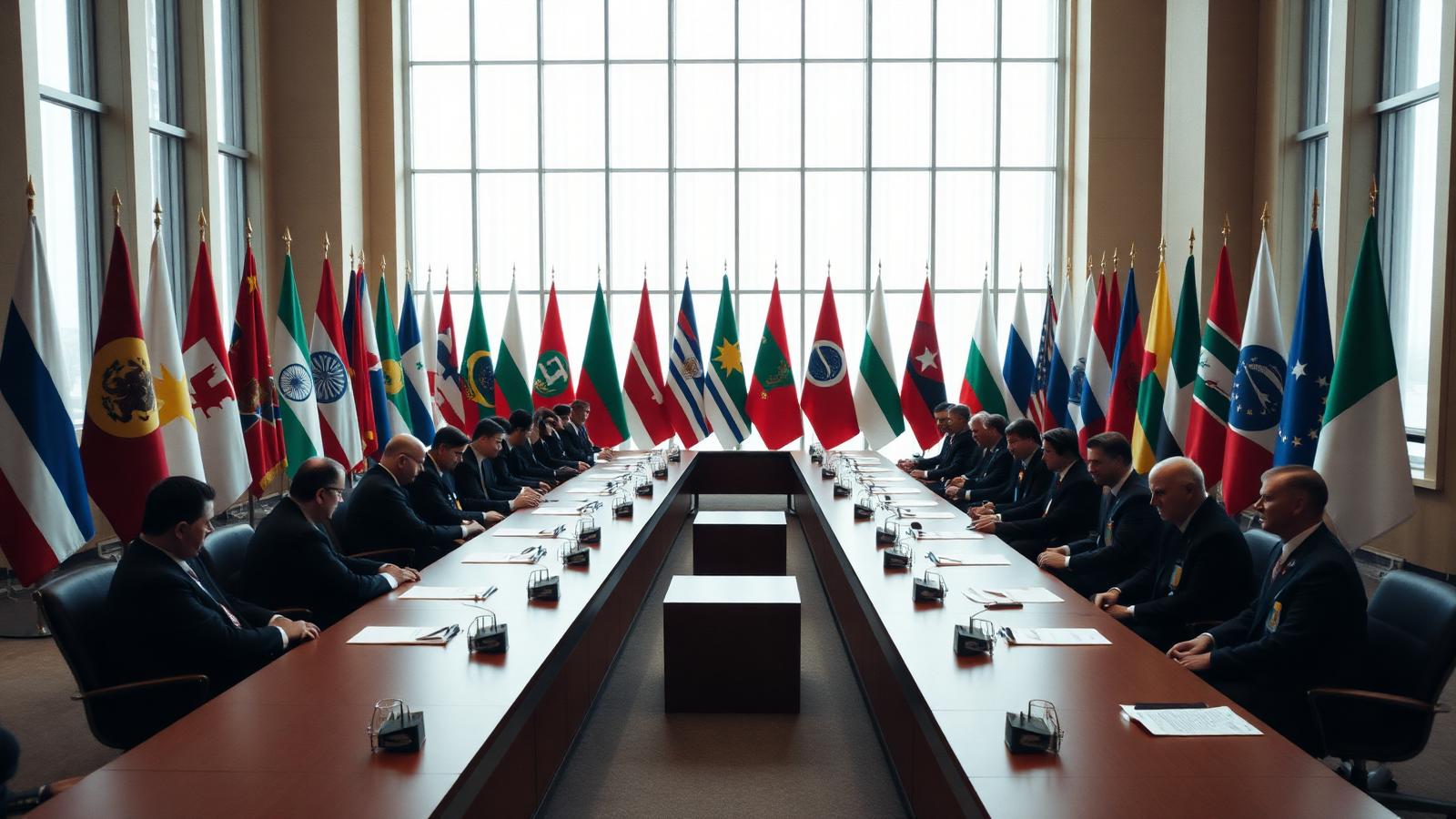
Summit diplomacy is easy to dismiss. The photographs are staged, the communiqués are drafted weeks in advance, and the language is deliberately unmemorable. Yet the institutions built at such meetings - from the post-war financial architecture to the modern climate regime - have shaped the lives of billions.
What makes the current cycle unusual is that the underlying question is no longer how to run the existing system. It is who gets to write the next one.
Why This Matters Right Now
Three structural shifts have converged.
The distribution of economic weight has moved. Emerging economies now account for a majority of global growth, and the governance of multilateral institutions has not kept pace with that reality.
Great-power competition has returned as an organising principle, pulling security, technology and trade policy into a single strategic frame.
Transnational problems have intensified - climate, pandemics, migration, AI governance - and none can be solved by any state acting alone.
The result is a period of institutional improvisation: overlapping coalitions, minilateral groupings and issue-specific clubs operating alongside older universal bodies.
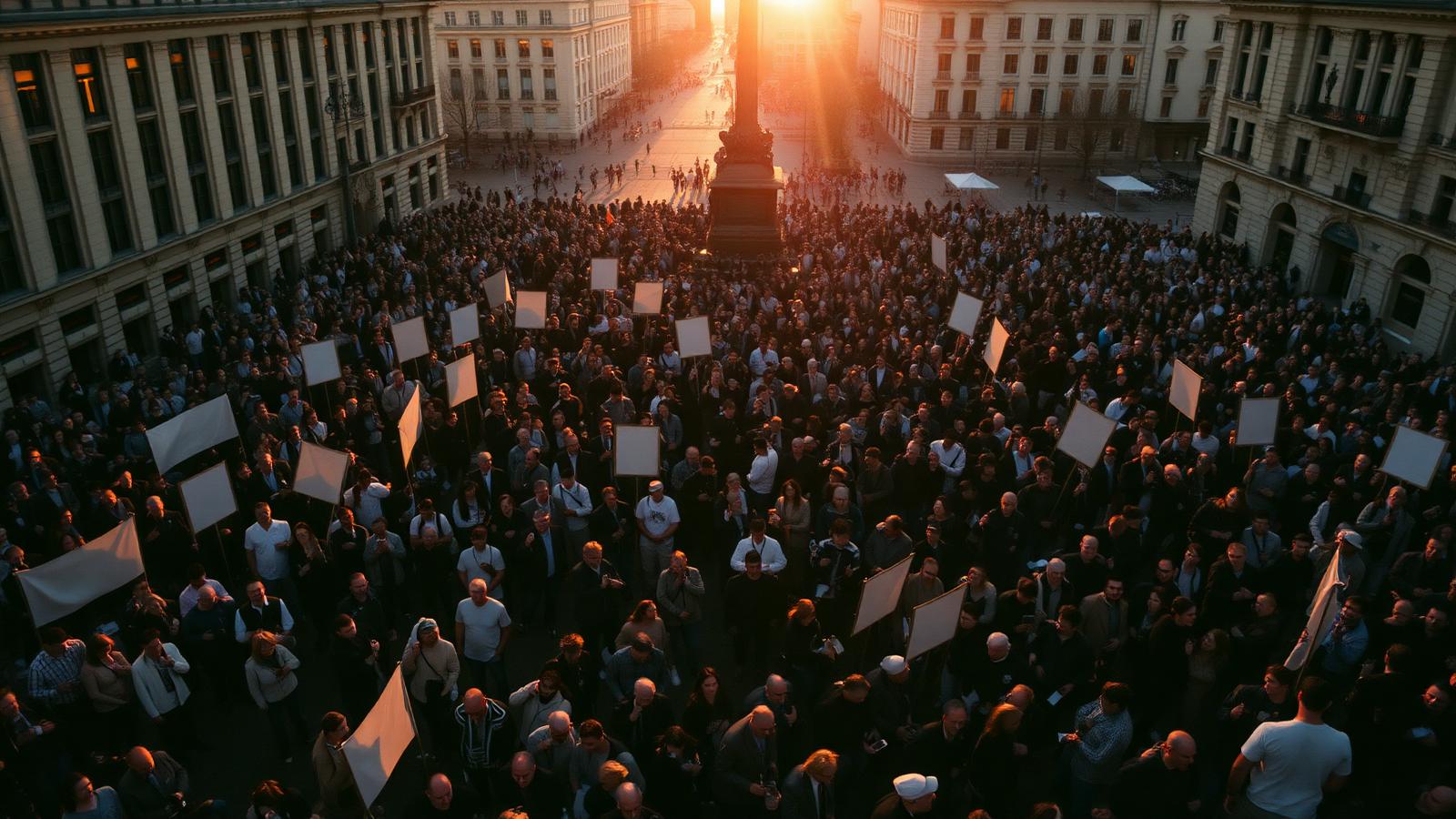
Image placement: after the introduction. ALT text: "Large crowd gathered in a European city square at sunset holding blank banners".
Background: How the System Was Built
The framework most people think of as "the international order" was assembled in a short window after 1944: the United Nations and its Security Council, the Bretton Woods institutions, and later the trade body that became the WTO.
Two features of that design now generate friction.
Voting weight reflects 1945 and 1944. Permanent Security Council membership and quota shares at the financial institutions encode a distribution of power that no longer exists. Reform requires the consent of those who would lose relative influence.
Consensus rules protect stability at the cost of speed. Where unanimity is required, a single objection can block action - which is why coalitions of the willing have proliferated.
The Latest Developments
Minilateralism is displacing universalism
Where large bodies deadlock, smaller groupings act. Regional security pacts, sectoral climate clubs, technology-standards coalitions and expanded economic blocs are all growing in significance. They move faster and bind less.
Development finance has become contested terrain
Infrastructure lending is now explicitly strategic. Competing offers of ports, rail, fibre and energy capacity come attached to different standards, currencies and political expectations, and recipient states have gained real bargaining power as a result.
Reform pressure on the institutions is rising
Proposals to expand Security Council membership, rebalance financial institution quotas and reform sovereign debt restructuring have moved from academic papers into formal agendas. Progress remains slow, but the direction of travel is clear.
Middle powers are hedging deliberately
A substantial group of states - across the Gulf, South and Southeast Asia, Africa and Latin America - has concluded that non-alignment is more profitable than alignment. They trade, arm and negotiate across blocs, and increasingly set the terms.
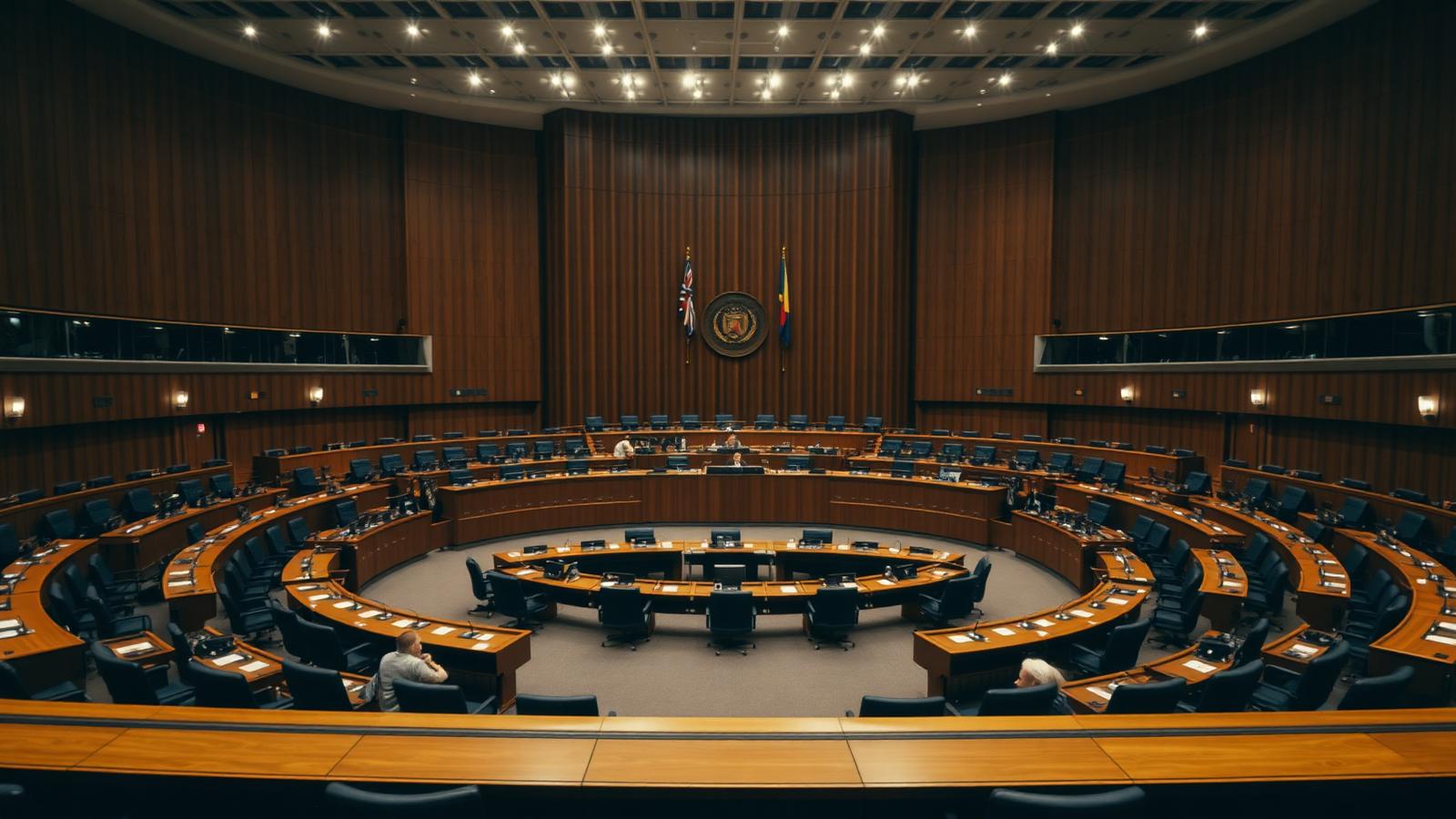
Image placement: within the "Latest Developments" section. ALT text: "Interior of a modern parliamentary chamber with curved rows of empty seats".
Key Facts
- The UN has 193 member states; the Security Council has five permanent members with veto power.
- Emerging market and developing economies now generate the majority of global GDP growth measured at purchasing power parity, according to IMF data.
- More than half of low-income countries are assessed as being in or at high risk of debt distress, making debt architecture a central summit issue.
- Regional trade agreements now number in the hundreds, reflecting the shift away from universal negotiation.
Expert Perspectives
Institutionalists argue that even weakened multilateral bodies remain valuable, because they lower the cost of cooperation and provide legitimacy that ad hoc coalitions cannot.
Realists counter that institutions reflect power rather than constrain it, and that the current turbulence is simply the system re-pricing after a genuine shift in relative capability.
A third view - increasingly common among diplomats from middle powers - holds that fragmentation is not necessarily a crisis. Multiple overlapping forums may prove more resilient than one brittle universal system, provided that basic norms on force and trade survive.
Real-World Impact
On security
Where deterrence architecture is contested, defence spending rises. Several regions have seen the largest sustained increases in military expenditure since the Cold War, with direct consequences for national budgets.
On the economy
Diplomatic alignment increasingly determines market access. Firms now conduct geopolitical risk assessment as a routine part of investment planning - a shift explored in our analysis of the new tariff landscape.
On climate and health
Both files depend on cooperation with adversaries. Progress has been real but slower than the science requires, and financing commitments consistently lag pledges.
On ordinary citizens
Visa regimes, remittance costs, energy prices, food import security and student mobility all flow from decisions taken at this level. The distance between a communiqué and a household budget is shorter than it appears.
Key Takeaways
- The contest is over rule-setting authority, not merely over specific policies.
- Smaller, faster coalitions are displacing universal bodies in practice.
- Middle powers have gained genuine leverage by refusing to align.
- Debt and development finance are now central, not peripheral, summit issues.
- Institutional reform is advancing slowly but is no longer taboo.
Frequently Asked Questions
Are summits actually useful? The measurable output is usually incremental. Their durable value lies in maintaining working channels between states that disagree - which matters most precisely when relations are worst.
Is the United Nations becoming irrelevant? Its enforcement capacity is limited by design, but its humanitarian, health and standard-setting functions remain heavily used. Irrelevance overstates the case; constraint does not.
What is a "middle power"? A state with significant regional influence but without global reach - increasingly able to shape outcomes by withholding alignment rather than by projecting force.
Conclusion and Outlook
The order emerging from this period is unlikely to be a clean replacement for the old one. Expect layers: universal bodies retained for legitimacy, regional blocs for economics, and issue-specific clubs for speed.
The three indicators worth tracking are quota reform at the international financial institutions, the durability of new security pacts, and whether debt restructuring frameworks can be made to function at scale.
Continue with our World coverage and our Politics section.
Sources and further reading: United Nations, International Monetary Fund, Reuters world news.
Which international story should we investigate next? Leave a comment and share this piece.