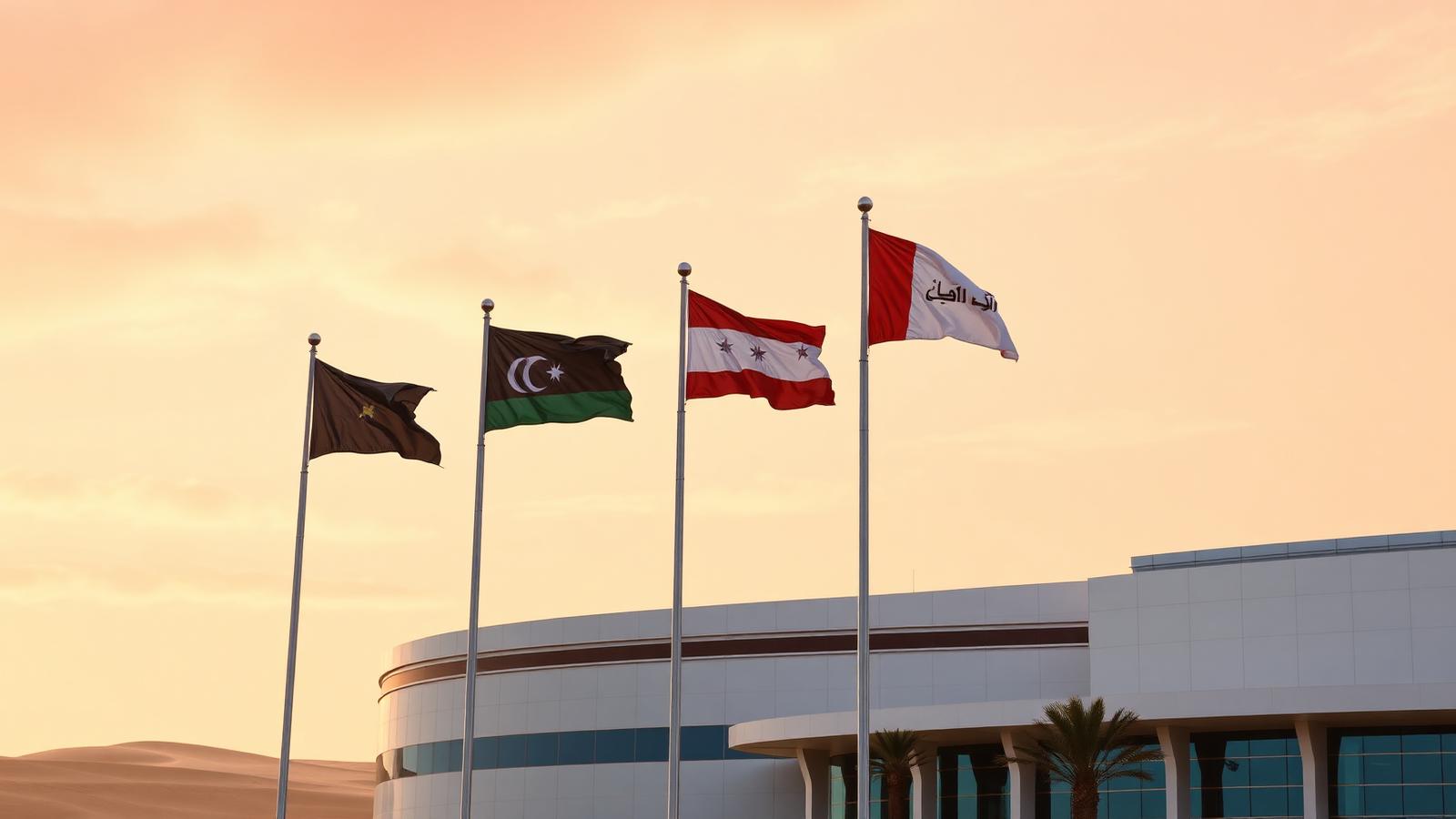
In the city of Mecca, Saudi Crown Prince Mohammed bin Salman, Turkish President Recep Tayyip Erdogan and Pakistani Prime Minister Shehbaz Sharif signed a document that changes the arithmetic of Middle Eastern security.
The Mecca Joint Defence Agreement states that "any armed attack against any one of the three States shall be regarded as an attack against them all". It commits the signatories to "strengthen collective deterrence against any act of aggression" and to enhance "all aspects of defence co-operation".
Three nuclear-adjacent, resource-rich, strategically central states - one holding the world's spare oil capacity, one a NATO member with a booming arms industry, one a declared nuclear power - have written a mutual defence clause of their own.
Why now: the war that rearranged the region
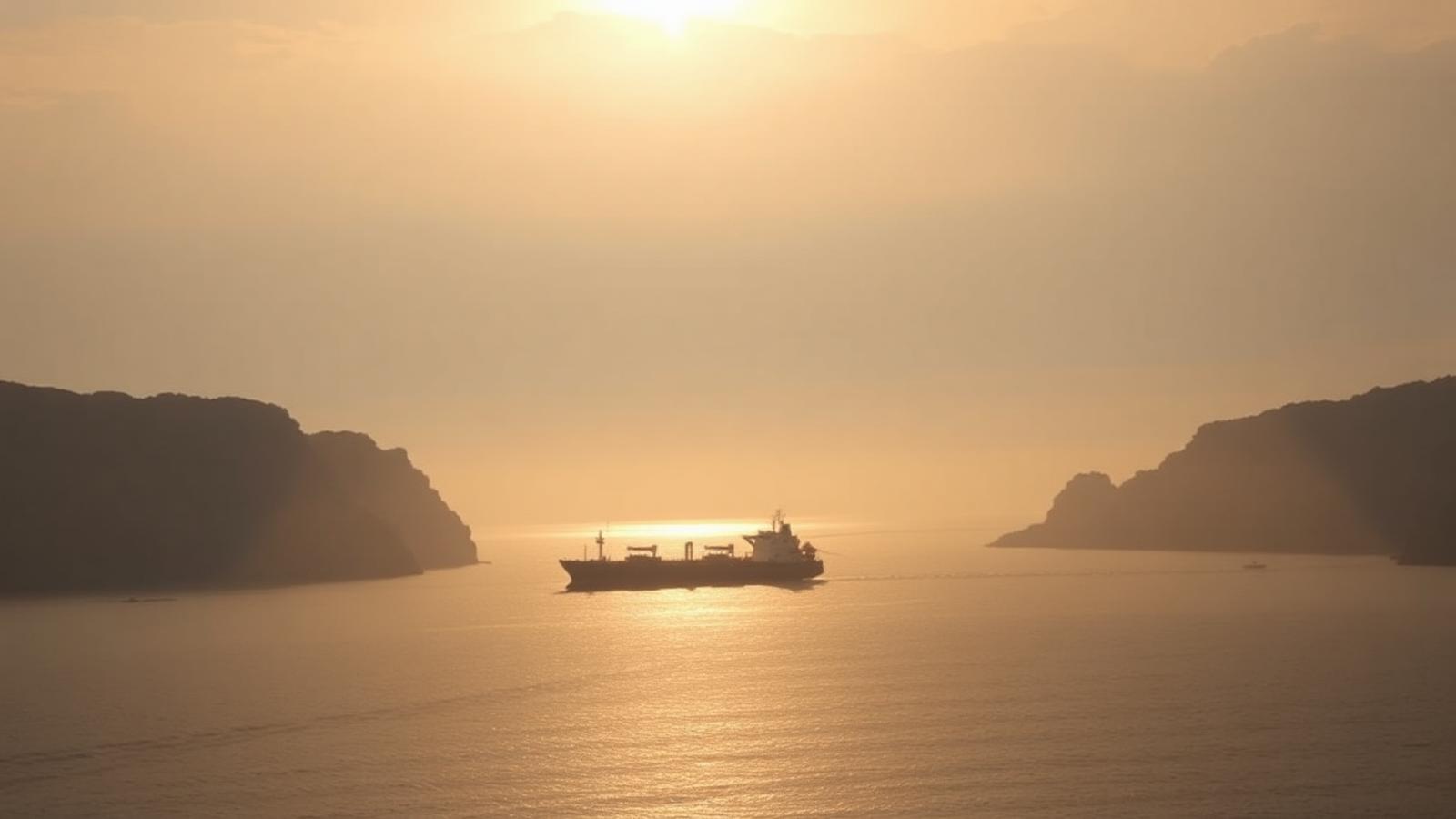
The pact cannot be read apart from the events of 28 February, when the United States and Israel attacked Iran. Tehran and its allies retaliated against targets in Saudi Arabia and other Gulf states, disrupted traffic through the Strait of Hormuz - the channel through which a fifth of the world's oil moves - and struck at Red Sea shipping.
Then, last month, Yemen's Iran-backed Houthi movement, which controls much of the country's north-west, declared a "maritime embargo" against Saudi Arabia and began targeting Saudi airports, oil facilities and tankers in the Red Sea.
For Riyadh, the lesson of the past six months is unambiguous: the security guarantees it relied upon for half a century did not stop missiles landing on its own territory. A report last year by the Centre for Strategic and International Studies noted that "across the Gulf, states recalibrated their defence strategies". This agreement is one of the recalibrations.
What each country gets
The three signatories did not walk into Mecca with the same shopping list.
Saudi Arabia buys depth. Its security architecture has been upended twice over - by the US-Israel war with Iran, and by the demonstration effect of last year's Israeli strikes on Doha targeting senior Hamas officials. If a Gulf capital can be struck in pursuit of a third party's war, sovereignty needs more than one underwriter. Riyadh already announced a bilateral defence pact with Pakistan last year; the Mecca text widens it.
Pakistan buys weight and standing. Its confrontation with India in May 2025 escalated into open conflict before stopping short of full-scale war. Having Saudi economic muscle and Turkish military-industrial capability formally on its side is a material change to that calculation. Islamabad has also spent the past year raising its diplomatic profile - acting as an intermediary between Iran and the United States and hosting ceasefire negotiations. The pact cements a status it has been building.
Turkey buys industrial scale. Burcu Ozcelik of the London-based Royal United Services Institute told the BBC the deal offers Turkish defence firms opportunities through "joint production, technology partnerships, procurement and greater military interoperability". Ankara's drone and munitions exports have become an instrument of foreign policy; a mutual defence framework converts customers into partners.
| Signatory | Primary motive | What it contributes |
|---|---|---|
| Saudi Arabia | Security after direct strikes on its territory | Financing, energy leverage, convening power |
| Pakistan | Deterrence against India; regional standing | Large standing army, nuclear status, combat experience |
| Turkey | Defence-industrial expansion | Drones, munitions, joint production, NATO interoperability |
The clause that isn't spelled out
Here is the pact's central weakness, and the reason analysts are cautious. The text pledges mutual support but provides no specifics on the obligations of each party. There is no equivalent of NATO's decades of command structures, standing forces and consultation procedure. A Turkish official quoted by Reuters stressed the pact was "purely defensive in nature".
Mutual defence agreements are simple on paper and treacherous in practice. Would a Houthi drone striking a Saudi refinery trigger it? Would an Indian air strike on Pakistani territory oblige Ankara - a NATO member with its own obligations - to act? Would a US-Israeli operation against Iran that spills onto Saudi soil implicate all three?
Without agreed thresholds, the pact functions primarily as a signalling device: a warning to potential aggressors that any strike now carries unquantifiable escalation risk. That ambiguity is deliberate. It is also the reason such agreements can either deter a war or widen one.
Tehran's answer
The response from Iran was dismissive and quick. Ebrahim Rezaei, a member of the Iranian parliament's National Security commission, wrote on X: "The Saudis should know that a paper agreement with Turkey and Pakistan does not bring them security, just as years of unilateral milking of the Americans did not bring them security."
The framing matters more than the insult. Tehran is arguing that the pact is a substitute for a lost American guarantee rather than a new capability - and implying that the guarantee it replaces was never worth much. Whether Iran genuinely believes that will be measured in behaviour rather than statements: in whether Red Sea and Hormuz harassment continues at the same tempo over the coming weeks.
What to watch next
- Implementation machinery. A pact without a joint command, liaison staff and exercise calendar remains a communiqué. Watch for the first announced trilateral exercise or a standing coordination body.
- Procurement announcements. Turkish joint-production deals in Saudi Arabia or Pakistan would be the clearest evidence the agreement is operational rather than declaratory.
- Who joins. Other Gulf states recalibrating after Doha and Hormuz will decide whether to seek accession, and Egypt and Indonesia will be watched closely.
- Washington's reaction. The pact is implicitly a hedge against American reliability. How the United States chooses to read that - as burden-sharing or as drift - will shape Gulf arms relationships for years.
- Red Sea shipping rates. Insurance premiums are the market's live verdict on whether deterrence is working.
The wider pattern
This agreement belongs to a broader rewiring of global alignment that Protunez has been tracking through the year: the quiet negotiations reshaping the global order and the reorganisation of trade routes and supply chains that follow every security shock. Defence pacts, tariff walls and energy contracts are increasingly written by the same people in the same weeks.
For readers outside the region, the practical transmission channel remains energy and freight. A Hormuz disruption reaches European and Asian consumers through diesel prices and shipping costs within weeks. A credible deterrent that keeps the strait open is, in that narrow sense, a household economic story as much as a geopolitical one.
How mutual defence pacts behave in practice
History offers a warning and a reassurance about agreements like this one, and they point in opposite directions.
The warning is 1914. Interlocking guarantees with unclear triggers converted a regional assassination into a continental war, because each signatory''s obligation activated the next. Pacts that are vague about thresholds transfer the decision to escalate from capitals to whoever fires first - including non-state actors who may want exactly that outcome.
The reassurance is NATO. A mutual defence clause backed by seventy years of command structures, joint exercises, standardised equipment and a consultation mechanism has been invoked exactly once, and never in Europe. Credible deterrence, properly institutionalised, reduces the number of attacks rather than multiplying the number of wars.
The Mecca agreement currently resembles the first model more than the second. It has the clause and none of the machinery. Building the machinery - liaison staff, a joint planning cell, an exercise calendar, agreed rules on what counts as an armed attack - is slow, unglamorous work that takes years and rarely produces headlines. Whether the three governments do that work is the single best indicator of whether this pact deters anything.
The industrial dimension nobody announced
Read the agreement as a defence-industrial arrangement and it becomes clearer. Turkey has spent fifteen years building an export-grade arms industry, and it now needs two things: capital for scale, and guaranteed demand. Saudi Arabia has capital and a stated policy of localising defence manufacturing. Pakistan has manufacturing capacity, a large trained workforce and operational experience most exporters cannot claim.
Joint production, technology partnerships and procurement - the areas Rusi''s Burcu Ozcelik identified - describe a supply chain, not just a security guarantee. Interoperability is the connective tissue: shared platforms mean shared maintenance, shared training pipelines and shared spare-parts inventories, which are far harder to unwind than a communiqué. Countries that build weapons together rarely fight each other, and rarely abandon each other quickly.
That is why procurement announcements will tell the story faster than diplomatic statements. A joint drone production facility or a co-financed munitions plant would mean the pact has moved from declaration into concrete.
What it means for energy and shipping
For readers outside the region, the transmission channel is the sea.
Roughly a fifth of the world''s oil moves through the Strait of Hormuz, and a large share of Europe-Asia container traffic passes the Red Sea. Both routes have been disrupted this year - Hormuz during the retaliation that followed the 28 February attacks, the Red Sea by the Houthi campaign and last month''s declared maritime embargo against Saudi Arabia.
Disruption reaches households through three prices: crude, refined diesel, and marine insurance. War-risk premiums move within days of an incident and are the most honest available measure of whether shipowners believe deterrence is working. Freight rates follow within weeks, and fuel and consumer goods within a quarter.
If the Mecca pact does reduce the frequency of attacks on Saudi energy infrastructure and shipping, the effect will show up as narrowing risk premiums long before any politician claims credit. If it does not, the same indices will say so.
Five things that would prove the pact is real
- A trilateral exercise with troops, not just staff officers.
- A standing coordination body with a named secretariat and a budget.
- A joint production contract signed between the three defence establishments.
- An agreed definition of "armed attack", published or leaked, that covers drone and missile strikes by non-state actors.
- A fourth signatory seeking accession, which would turn a triangle into a bloc.
Absent those, the pact remains what Tehran claims it is - a strong statement of intent between three governments who have each concluded, separately, that they can no longer outsource their security.
FAQ
What does the Mecca Joint Defence Agreement say? That an armed attack on any one of Saudi Arabia, Turkey or Pakistan will be treated as an attack on all three, and that the countries will deepen defence co-operation across all areas.
Is it the same as NATO's Article 5? Structurally similar in principle, but far less developed. The text sets out no specific obligations, command arrangements or triggers.
Was there an earlier agreement? Yes. Saudi Arabia and Pakistan announced a bilateral joint defence pact last year. The Mecca agreement extends that framework to include Turkey.
How has Iran responded? A senior Iranian MP dismissed it as a "paper agreement" that would not deliver Saudi security.
Does this pull Turkey's NATO commitments into a Middle Eastern conflict? Not automatically. NATO obligations are separate, and a Turkish official described the new pact as purely defensive. The interaction has not been tested.
Sources and further reading
- BBC News: Saudi Arabia, Turkey and Pakistan sign defence pact
- Royal United Services Institute: rusi.org
- Centre for Strategic and International Studies: csis.org
- Reuters world coverage: reuters.com/world/middle-east
More from Protunez: World · Politics · Business & Economy