Most trade fights begin with something you can picture: cars, steel beams, bottles of wine. This one begins with a grey, brittle powder that looks like gravel and behaves like the most strategic commodity on earth.
On 6 August 2026, President Donald Trump signed a proclamation imposing a 15% ad valorem tariff on polysilicon derivatives and, more consequentially, a minimum import price programme covering polysilicon, ingots, wafers, solar cells and finished solar modules. According to the White House fact sheet, the measures follow a Section 232 national security investigation opened by the Commerce Department in July 2025. The remedies take effect 120 days after signing — 12:01am Eastern on 4 December 2026 — giving importers, utilities and chipmakers roughly four months to redraw their contracts.
The framing from the administration is national security, not consumer prices. The fact sheet states the case bluntly: America's share of global polysilicon production capacity has fallen from roughly 50% in 2005 to under 2% in 2024. China now accounts for an estimated 90% to 93% of global capacity. In an era where compute and electricity are the two binding constraints on artificial intelligence, that concentration is no longer treated in Washington as an economic inconvenience. It is treated as a chokepoint.
What polysilicon actually is, and why it sits underneath everything
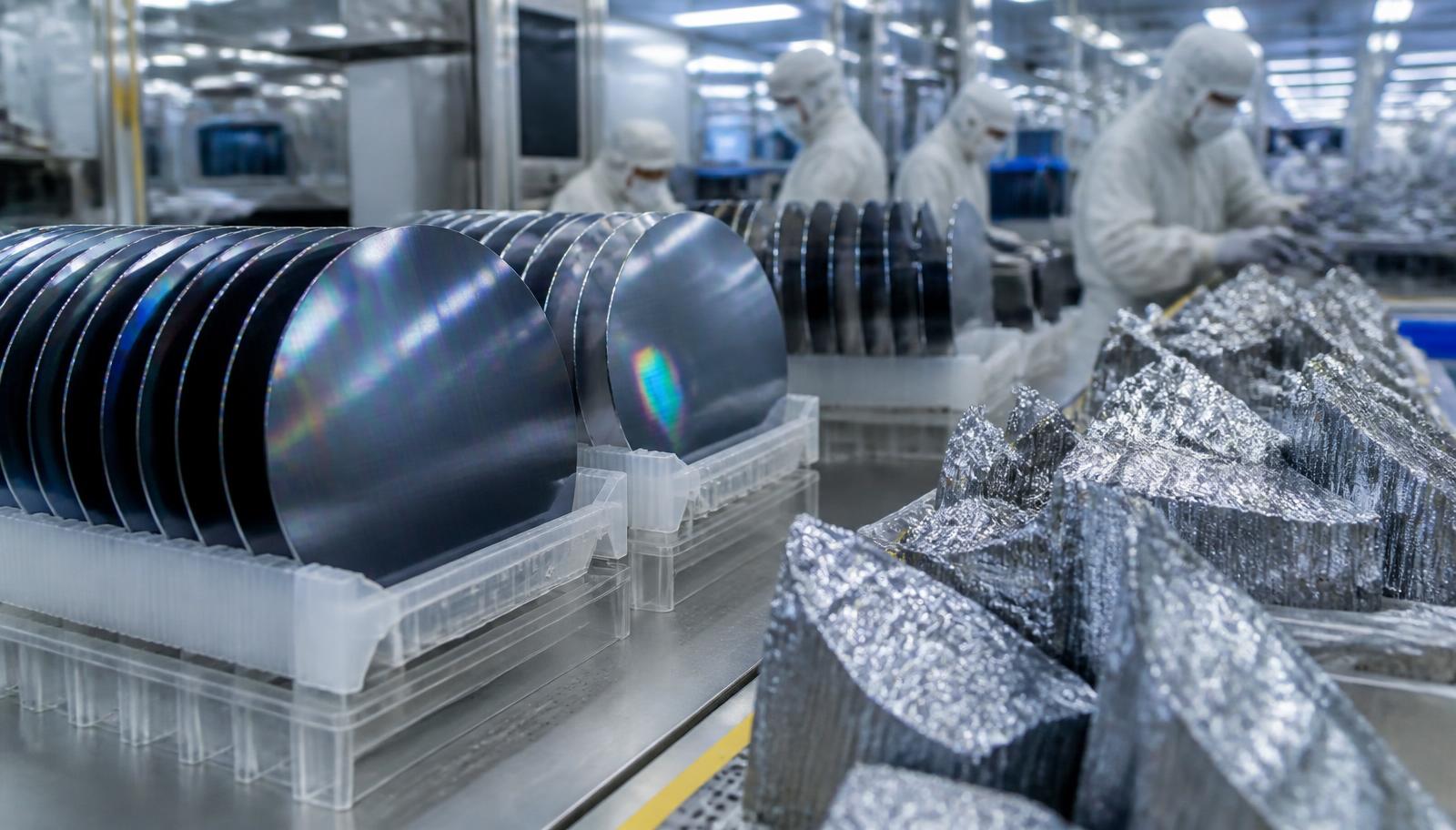
Polysilicon is silicon refined to extraordinary purity — for semiconductor grade, often better than 99.9999999% (nine nines). Quartz is reduced to metallurgical silicon, then purified, usually through the Siemens process, into rods or chunks. Those chunks are melted and pulled into cylindrical single-crystal ingots, sliced into wafers, and either doped into solar cells or patterned into logic and memory chips.
That single supply chain feeds two industries the modern economy cannot function without:
- Semiconductors — processors, memory, sensors, power electronics, and the accelerators inside every AI data centre.
- Solar photovoltaics — the cheapest new source of electricity in most markets, and the fastest-deploying one.
The two grades differ. Solar-grade polysilicon is cheaper and more tolerant of impurities; electronic-grade commands a large premium and a much shorter list of qualified suppliers. Both, however, are produced in plants that are brutally capital-intensive, take years to build, and are viable only when run near full utilisation. That economic structure is why a price war can permanently remove producers from the map — and why the administration reached for a price floor rather than a tariff alone.
The specifics: floors, not just duties
The detail that matters most to buyers is not the 15% headline. It is the set of minimum import prices. As reported by KED Global, the proclamation sets floors at:
| Product | Minimum import price |
|---|---|
| Raw polysilicon | $21 per kilogram |
| Polysilicon ingots and wafers | $100 per kilogram |
| Solar cells | $0.22 per watt |
| Solar modules | $0.38 per watt |
A price floor works differently from a percentage duty. A tariff scales with the invoice; a floor removes the bottom of the market entirely. If a foreign producer offers polysilicon at $9 per kilogram, the 15% duty on a low base still leaves it far below a US producer's cash cost. A $21 floor makes that offer legally irrelevant. It converts a race to the bottom into a regulated band — the same logic the European Union once applied to Chinese solar imports through its own minimum-price undertaking, and the same logic behind decades of antidumping practice.
Alongside the trade remedies, the proclamation authorises the Secretary of Commerce to build an incentive programme for firms that construct, expand or refurbish US polysilicon and derivative capacity. That is the carrot behind the stick: protection is meant to buy time for investment, not simply to raise revenue.
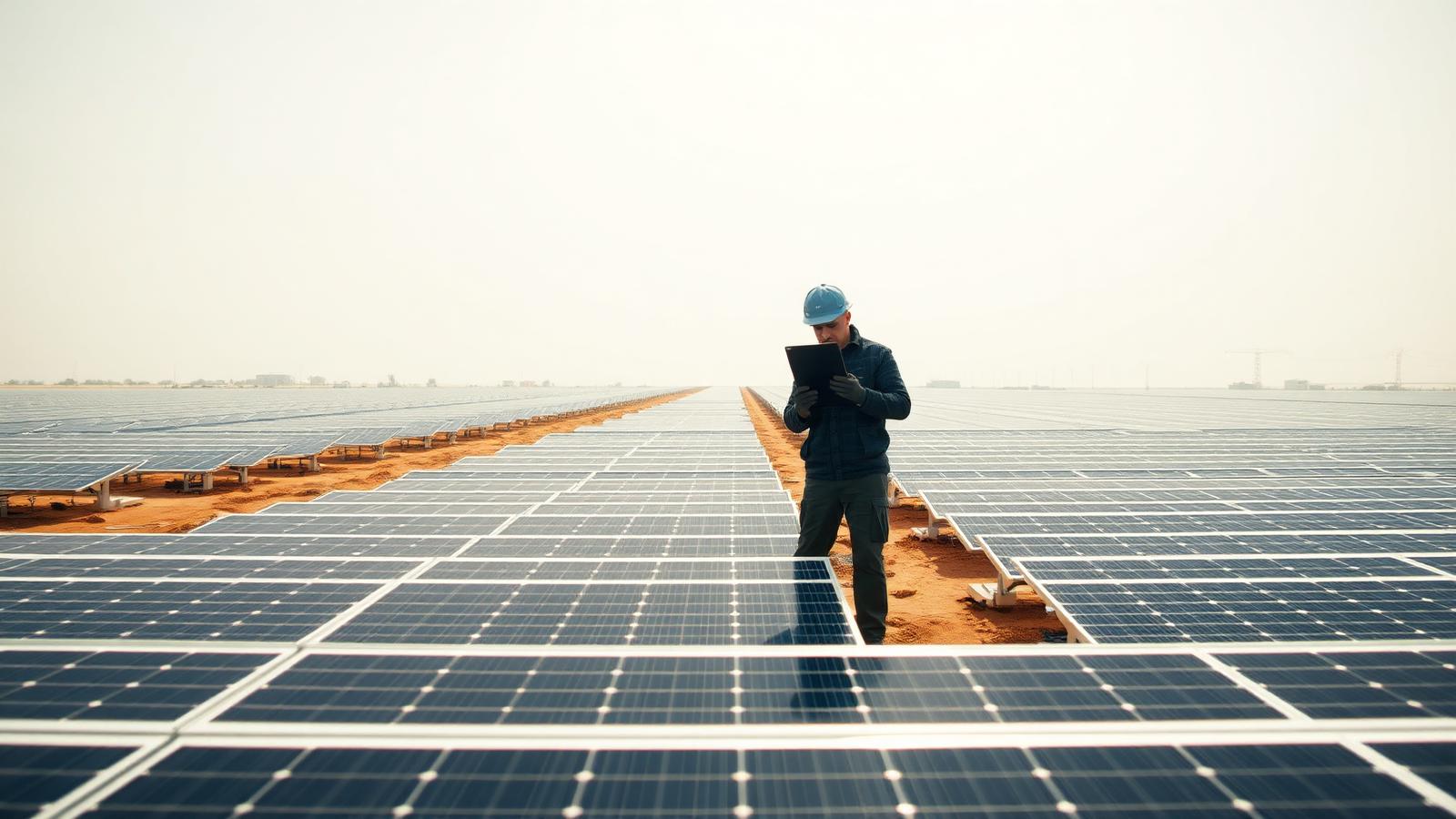
US solar developers face higher module costs once the $0.38 per watt price floor takes effect on 4 December 2026.
Who wins
US producers first. The two names that dominate domestic supply are Hemlock Semiconductor in Michigan and Wacker Chemie's Tennessee plant. Both spent the last decade squeezed between collapsing global prices and the loss of the Chinese solar market after retaliatory duties. A floor at $21 per kilogram is, in effect, a survival guarantee for existing lines and a financeable assumption for new ones.
Non-Chinese exporters second — and immediately. Markets moved within hours. Shares in South Korea's Hanwha Solutions and OCI Holdings rallied on the proclamation, with analysts arguing that Chinese producers now face a structural barrier in the US market that lets everyone else defend price premiums and margins. Hwang Sunghyun of Eugene Investment & Securities described non-Chinese producers as the clear relative beneficiaries. Malaysian and German capacity sits in a similar position.
US module assemblers with domestic content strategies. Firms that already buy non-Chinese wafers and cells — the Qcells plant in Cartersville, Georgia being the most-cited example — see their competitors' cost advantage narrow rather than their own costs rise.
Who pays
The honest answer is: whoever installs solar in the United States in 2027, and eventually whoever buys electricity from them.
A floor of $0.38 per watt on modules is well above the delivered price of the cheapest imported panels in recent years. For a 100-megawatt utility project, a difference of even five cents per watt is five million dollars of capital cost. Developers with signed power purchase agreements at pre-tariff assumptions face margin compression; developers still negotiating will price the risk in. Residential installers, who work on thinner absolute margins and shorter quotes, feel it fastest.
Chipmakers are more insulated in the short term, for three reasons. Electronic-grade polysilicon is a small fraction of a finished chip's cost. Long-term supply agreements are the norm, not spot purchases. And a meaningful share of US electronic-grade demand is already met domestically. The strain arrives at the wafer stage, where the $100 per kilogram floor lands on a market in which most capacity sits in Asia.
There is also a timing tension the administration has not resolved. The same policy that rebuilds a domestic material base raises the near-term cost of the electricity supply that AI data centres are competing for. Analysts covering the deployment pipeline have argued for months that the binding constraint on US compute growth is grid interconnection and generation, not chips. Making the cheapest marginal generation source more expensive works against that — which is why the 120-day delay and the incentive programme matter as much as the duties themselves.
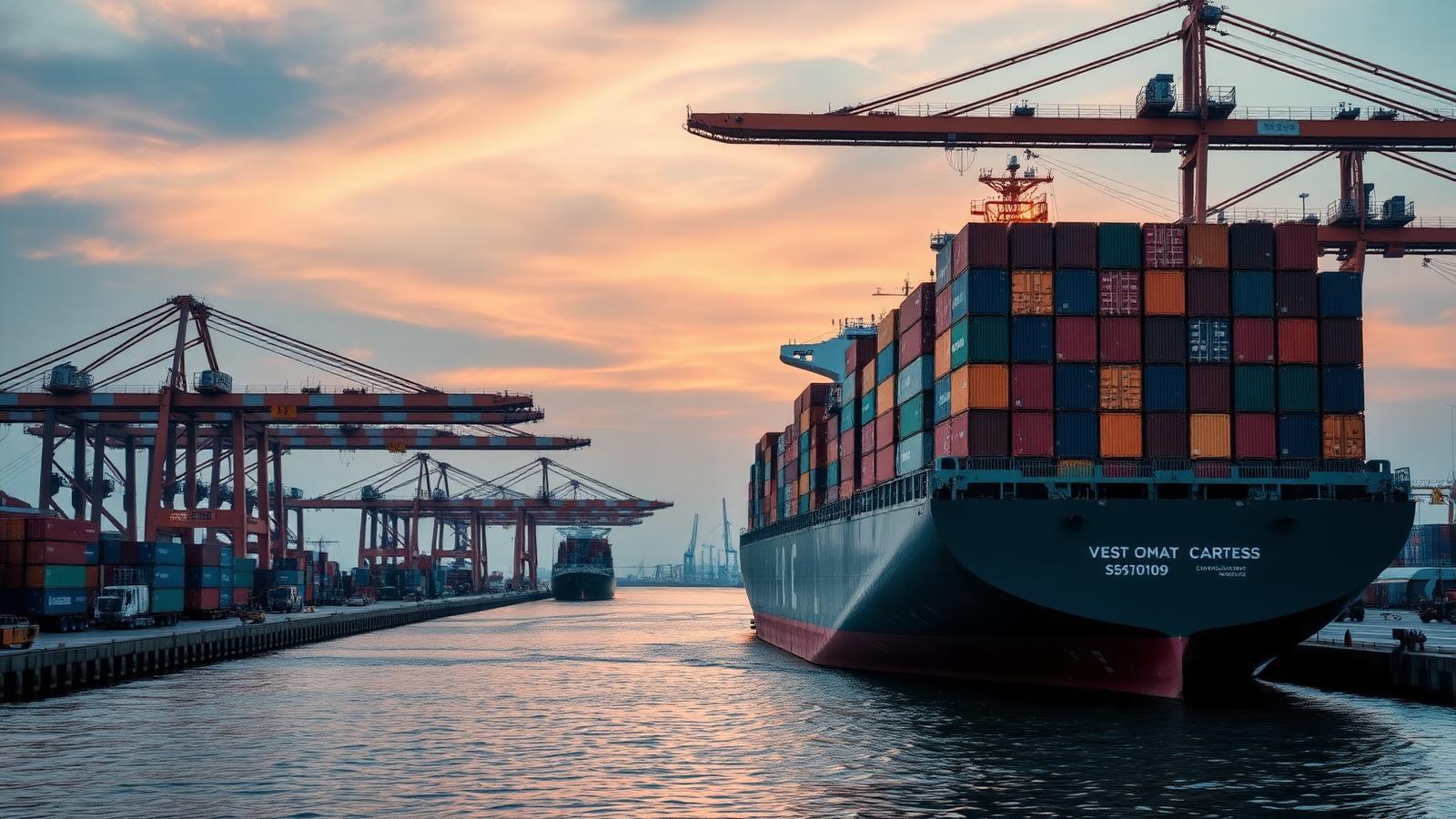
Importers have roughly four months to land pre-tariff cargo before the minimum import prices begin.
Beijing's response and the retaliation question
China's embassy in Washington called the move a serious breach of market principles and repeated its standing objection to the Section 232 investigation, telling the US to stop what it characterises as the politicisation of trade. Reporting by the BBC noted the criticism landed within hours of the signing.
The retaliation calculus is asymmetric and unusually interesting here. China's dominance in polysilicon is upstream, and its own export-control leverage sits in adjacent materials: gallium, germanium, graphite, rare-earth separation and, in a solar context, the specialised equipment and consumables that make cell lines run. Beijing has already demonstrated willingness to use licensing regimes rather than tariffs, which are slower to attribute and harder to litigate at the World Trade Organization.
There is also a domestic Chinese dimension that Western coverage often understates. Chinese polysilicon has been loss-making at scale for much of the past two years, and Beijing's own regulators have been pushing capacity discipline to end the price war. A US floor at $21 per kilogram does something counterintuitive: it partially validates that effort by removing the largest single market from the discount game.
Section 232, and the precedent this sets
Section 232 of the Trade Expansion Act of 1962 lets a president restrict imports found to threaten national security. It was the mechanism behind the 2018 steel and aluminium tariffs, and it has since been extended to copper, timber, pharmaceuticals and semiconductors. Polysilicon is the clearest example yet of the doctrine reaching an input rather than a product — a material three or four steps upstream of anything a consumer buys.
That is the precedent worth watching. Once "foundational material" is an accepted category, the list of candidates is long: high-purity quartz, electronic-grade chemicals, photoresists, silicon carbide substrates, battery-grade graphite. Each has the same profile — small global market, heavy geographic concentration, catastrophic downstream consequences if supply stops.
It also marks a shift in instrument design. Tariffs raise cost; minimum import prices set market structure. A floor is closer to industrial policy than to trade defence, and it invites the obvious question of who adjusts it, how often, and on what evidence when technology drives real costs down.
Shares in Hanwha Solutions and OCI Holdings rallied within hours of the proclamation.
What to watch between now and 4 December
- The Federal Register text. The fact sheet is a summary. Tariff schedule lines, the definition of "derivative", and the treatment of goods already on the water decide who actually pays.
- The Commerce incentive programme. Whether it arrives as grants, offtake guarantees or tax treatment determines if any new plant is financeable before 2030.
- Country carve-outs. Allied producers in Korea, Germany and Malaysia will lobby for treatment distinct from Chinese capacity. Whether the floor applies uniformly or bilaterally is the single biggest variable for global pricing.
- Q4 solar procurement. Expect a pull-forward — a rush of imports landing before 4 December, then an air pocket in early 2027.
- Wafer capacity announcements. The floor is only coherent if US ingot and wafer capacity follows. Without it, the policy taxes a step of the chain America does not perform.
- Legal challenge. Section 232 actions have survived court tests before, but a minimum-price programme is a novel remedy, and importers have standing and motive.
The bigger picture
For twenty years, the implicit deal in global manufacturing was that concentration was acceptable as long as it was cheap. Polysilicon is the purest expression of that deal: the world let one country build almost all of it because one country was willing to build it at a loss. The reversal now under way accepts higher prices as the cost of optionality.
Whether that trade is worth it depends on a number nobody yet knows — how much Americans will pay, in electricity bills and delayed projects, for a supply chain that cannot be switched off from abroad. The proclamation's answer is that the premium is smaller than the risk. The next two years will price it.
For readers tracking how these decisions land on household budgets, our earlier analysis of how tariff walls reach your shopping bill covers the transmission mechanism in detail. More coverage of trade, energy and industrial policy is collected in Business & Economy, and the compute side of the same story sits in Technology.
Further reading from primary and wire sources: the White House proclamation fact sheet, BBC News on the signing and Beijing's reaction, Reuters' advance reporting on the price-floor design, and KED Global on the Korean market response.
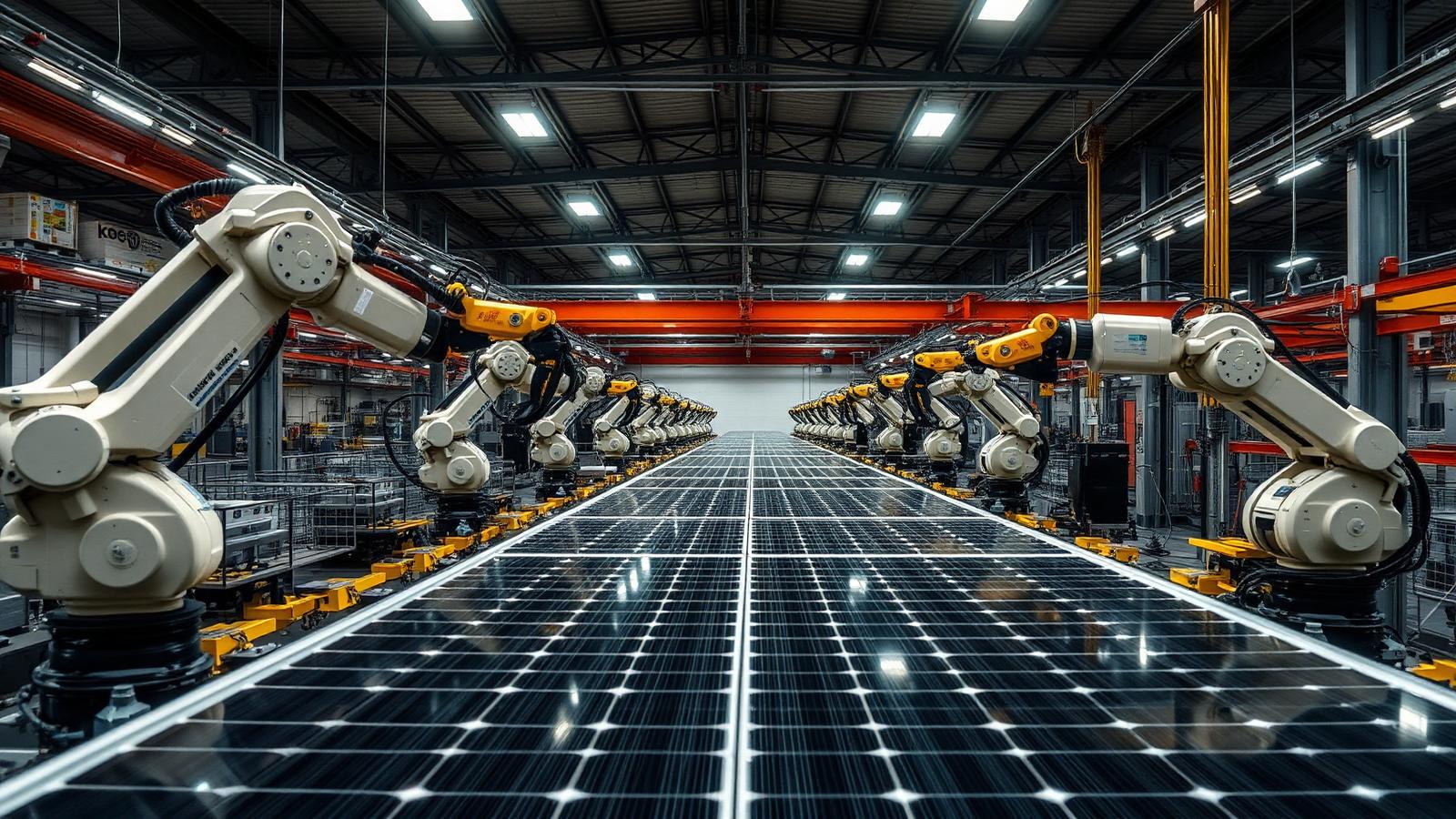
The proclamation pairs trade remedies with a Commerce Department incentive programme for new domestic capacity.
Frequently asked questions
When do the polysilicon tariffs start? The remedies take effect at 12:01am Eastern on 4 December 2026, 120 days after the 6 August proclamation.
Is the tariff 15% on everything? No. The 15% ad valorem duty applies to polysilicon derivative products. Raw polysilicon, ingots, wafers, cells and modules are governed primarily by minimum import prices.
Will this raise solar panel prices in the US? Almost certainly for imported product priced below the floors. The module floor of $0.38 per watt sits above the cheapest recent import pricing, so developers should expect higher capital costs from December.
Does it affect the price of laptops and phones? Not materially in the near term. Electronic-grade polysilicon is a very small share of a finished chip's cost, and most supply moves under long-term contracts.
Which companies benefit most? US producers Hemlock Semiconductor and Wacker, and non-Chinese exporters including Hanwha Solutions and OCI Holdings, whose shares rose on the announcement.