For three decades the organising principle of the world economy was simple: make it wherever it is cheapest, ship it wherever it is needed. That assumption is being dismantled - not by a single dramatic event, but by a steady accumulation of tariffs, export controls, subsidy programmes and security reviews.
The consequences are not abstract. They arrive at the checkout, in the price of a car, a laptop, a bag of coffee, or a domestic appliance.
Why This Matters Right Now
Trade policy has moved from the technical margins of government to the centre of political competition. Industrial subsidy programmes in the United States, the European Union, India, Japan and China now run into the hundreds of billions of dollars. Tariff schedules that had been broadly stable since the 1990s are being rewritten.
For households, the transmission mechanism is straightforward: tariffs raise landed costs, importers pass on some share, and consumer prices adjust. For businesses, the effect is more disruptive still, because it changes where it makes sense to build a factory for the next twenty years.
Image placement: after the introduction. ALT text: "Financial trading screens showing red and green market charts in a dark room".
Background: How We Got Here
Three shocks compounded.
The pandemic exposed how brittle just-in-time supply chains had become. Container rates spiked, semiconductor shortages idled car plants, and "resilience" replaced "efficiency" as the boardroom priority.
Geopolitical rupture followed. Export controls on advanced semiconductors, restrictions on critical minerals, and sanctions regimes converted trade into an explicit instrument of statecraft.
Industrial policy returned. Governments concluded that strategic sectors - chips, batteries, pharmaceuticals, clean energy - should not be left entirely to comparative advantage. Subsidies and local content rules followed, and those rules almost always carry trade friction.
The Latest Developments
Tariffs are broadening beyond strategic goods
Early rounds targeted steel, solar panels and semiconductors. Newer measures reach consumer categories - vehicles, electronics, textiles, furniture - where the price effect is felt directly by households.
Supply chains are lengthening, not shortening
"Nearshoring" and "friendshoring" rarely mean a factory moves home. More often, final assembly relocates to a third country while components still originate where they always did. The route gets longer, more complex, and more expensive - and rules-of-origin compliance becomes a significant cost in itself.
Shipping has been rerouted
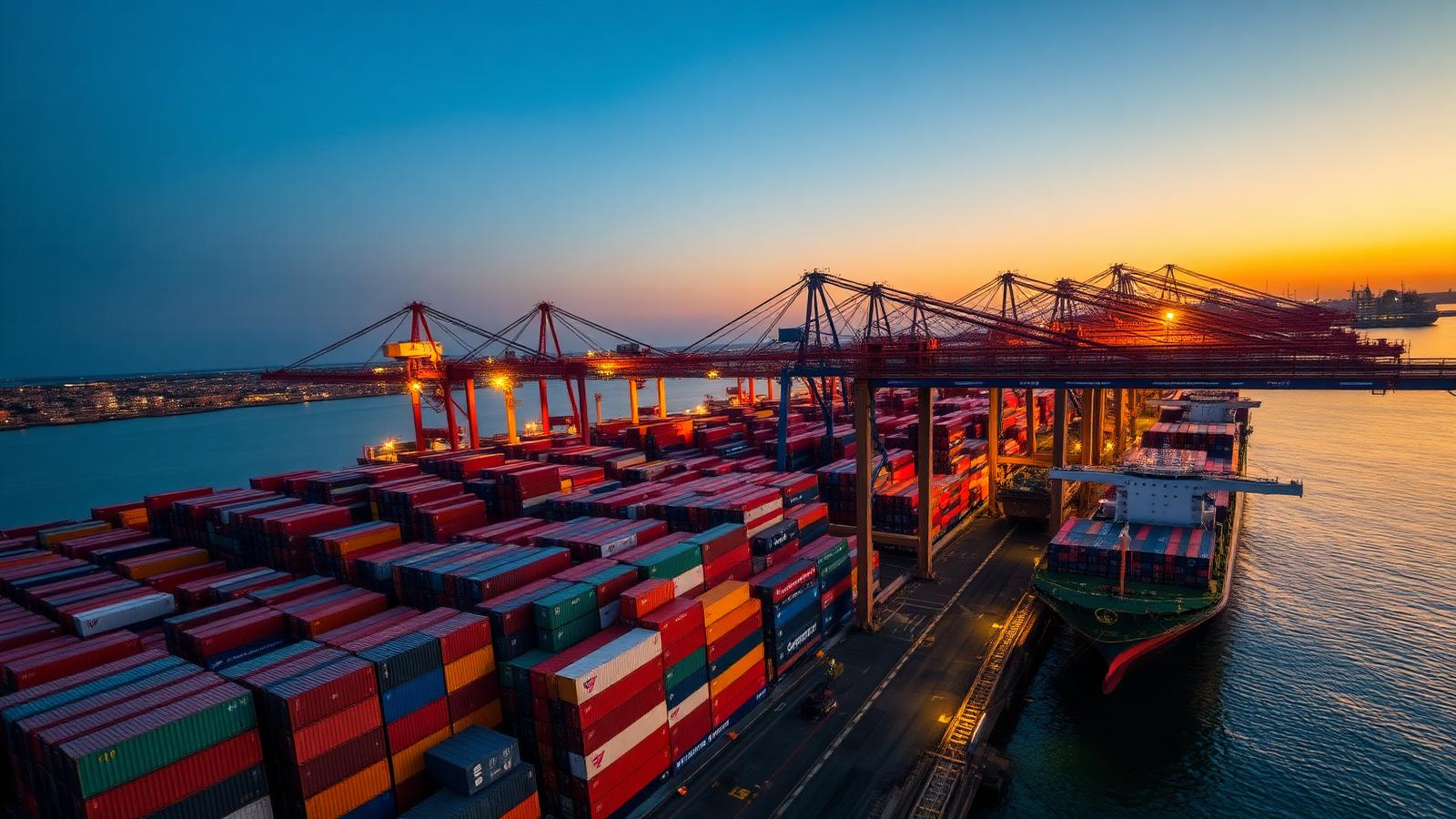
Disruption in key maritime chokepoints has pushed vessels onto longer routes, adding sailing days, fuel cost and insurance premiums. Freight rates remain far more volatile than in the 2010s.
Critical minerals are the new pressure point
Processing capacity for lithium, cobalt, rare earths and graphite is heavily concentrated. Export licensing on these inputs can influence prices in industries far downstream, from electric vehicles to defence.
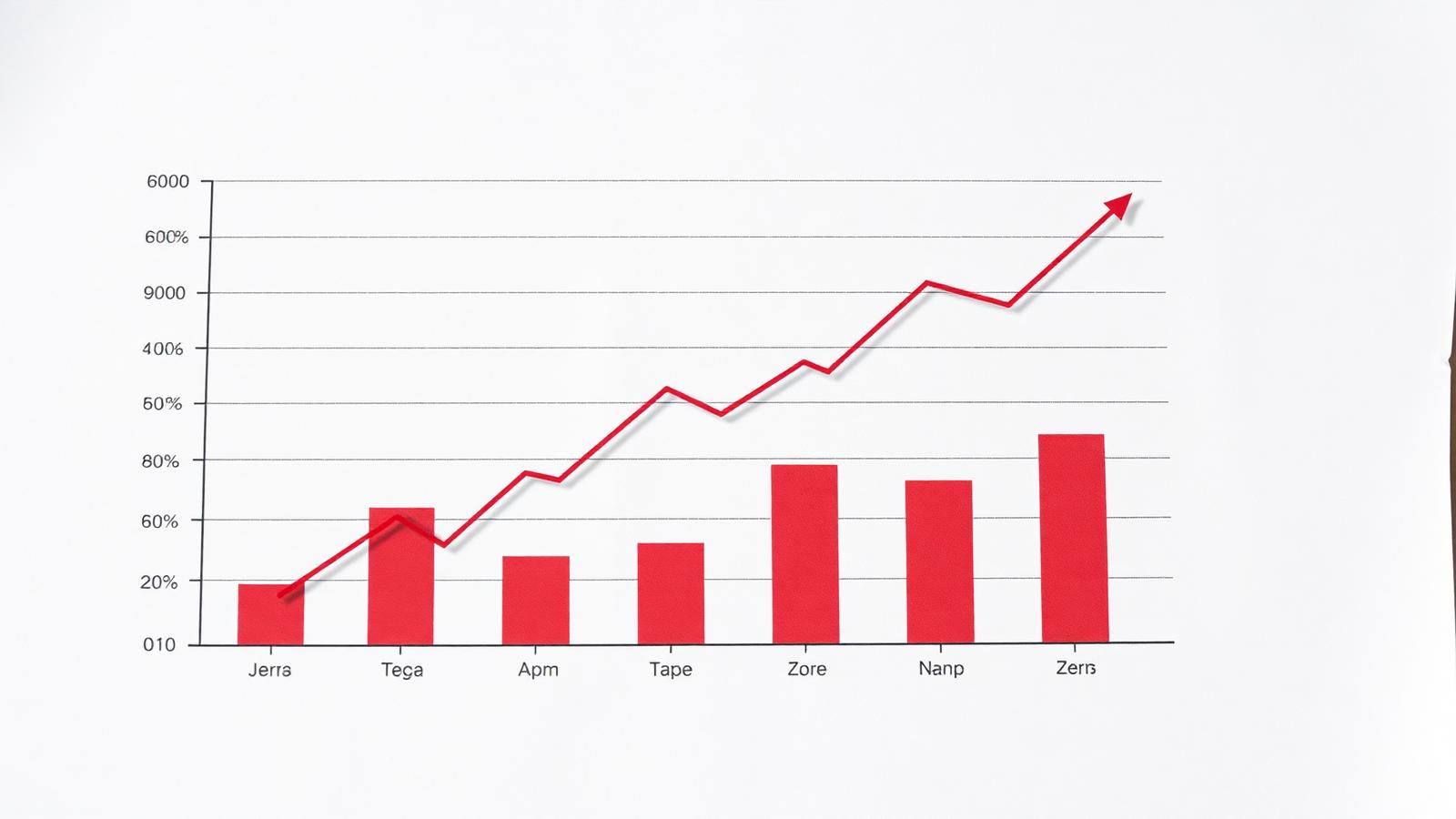
Image placement: within the "Latest Developments" section. ALT text: "Red bar and line chart showing rising import costs and trade volumes".
Key Facts and Data
- Global merchandise trade is worth well over 20 trillion US dollars a year.
- Tariff incidence studies from the 2018-2019 trade disputes consistently found that the large majority of the cost was borne domestically, by importers and consumers, rather than by foreign exporters.
- Roughly 80 per cent of world trade by volume moves by sea, which is why maritime disruption transmits so quickly into prices.
- Semiconductor manufacturing remains extraordinarily concentrated, with a small number of facilities responsible for most leading-edge output.
- Rerouting around a single major chokepoint can add ten to fourteen days to a voyage between Asia and Europe.
Expert Perspectives
Trade economists are broadly sceptical that tariffs improve aggregate welfare. The standard finding is that they raise domestic prices, invite retaliation, and protect fewer jobs than they cost elsewhere in the economy.
Security analysts respond that this calculation is incomplete. If a supply chain can be severed by a rival state, its efficiency is worth less than its reliability, and paying a resilience premium is rational.
Industry executives tend to occupy the middle. Their consistent complaint is not the direction of policy but its instability: capital expenditure decisions run for a decade, while tariff schedules can change in a quarter.
Real-World Impact
On prices
Tariffs on intermediate goods often matter more than tariffs on finished products, because they raise costs across many downstream sectors at once. The effect is usually a persistent level shift in prices rather than an ongoing inflation spiral.
On jobs
Protected sectors gain. Exporting sectors facing retaliation lose, as do manufacturers dependent on imported inputs. Net employment effects in most rigorous studies are small; distributional effects are large and geographically concentrated - which is precisely why the politics are so intense.
On developing economies
For countries pursuing export-led growth, a more fragmented trading system narrows the runway. Some benefit as alternative assembly hubs; others are squeezed out by rules-of-origin requirements they cannot meet.
On the energy transition
Clean technology supply chains are among the most exposed. Tariffs on batteries, solar modules and grid equipment raise the cost of decarbonisation - a tension that connects directly to the infrastructure pressures described in our report on AI data centres and power grids.
Key Takeaways
- Trade policy has become industrial and security policy, not just economic policy.
- Tariff costs are mostly paid domestically, by importers and consumers.
- Supply chains are becoming longer and more complex rather than genuinely shorter.
- Critical mineral processing is the most concentrated chokepoint in the system.
- Policy volatility, more than policy direction, is what businesses report as most damaging.
Frequently Asked Questions
Do tariffs cause inflation? They cause a one-off increase in the price level of affected goods rather than sustained inflation - unless they trigger broad retaliation or feed into wage expectations.
Who actually pays a tariff? The importer pays it at the border. How much is passed to consumers depends on competition and demand elasticity; empirical studies of recent tariff rounds found substantial pass-through.
Is globalisation over? No. Trade volumes remain near record highs. What is changing is the composition and routing of trade, and the degree to which it is shaped by policy rather than cost alone.
How can households reduce exposure? Durable goods with long, complex supply chains - vehicles, electronics, appliances - are the most exposed categories. Timing large purchases around announced tariff changes is the practical lever most households have.
Conclusion and Outlook
The efficient, low-friction trading system of the 2000s is not coming back in its old form. What replaces it will be more regionalised, more politically directed, and modestly more expensive - the price of resilience.
Watch three indicators over the coming year: the breadth of tariff coverage into consumer categories, export licensing decisions on critical minerals, and container freight rates as a real-time gauge of maritime stress.
Continue with our Business & Economy coverage and our World section for the diplomatic backdrop.
Sources and further reading: World Trade Organization, International Monetary Fund.
Has your business been hit by new import costs? Tell us in the comments - we read every response.