Two numbers landed within hours of each other on Monday, and together they tell one story. The world's oceans recorded their hottest July ever measured — an average sea surface temperature of 20.96C outside the polar regions, beating the 20.89C set in 2023, according to the EU's Copernicus Climate Change Service. And in eastern China, more than a million people were moved out of their homes as Typhoon Dolphin came ashore, the strongest storm to hit the country this year, after travelling roughly 6,000km and surviving more than three times as long as an average typhoon.
Warm water is not a background detail in that second story. It is the fuel.
What Copernicus actually reported
The headline figure covers sea surface temperature between 60 degrees north and 60 degrees south — the non-polar ocean, which is where nearly all tropical cyclones form. At 20.96C, last month set a new July record, and globally July 2026 was the joint second-warmest on record at 1.47C above the estimated pre-industrial average.
The regional detail matters more than the global average:
- Atlantic coast and western Mediterranean hit record July sea surface temperatures, producing widespread strong and severe marine heatwaves.
- Tropical Pacific temperatures stayed exceptionally high, with El Niño conditions developing and forecast to strengthen.
- Western Europe recorded its hottest ever June and July, averaging 21.62C across the two months — 2.79C above average.
- Hong Kong posted a record 36.9C on Sunday as Dolphin dragged warm air across the city.
"July 2026 was the third consecutive month of exceptional heat in western Europe," said Samantha Burgess, strategic lead for climate at the European Centre for Medium-Range Weather Forecasts. Persistent high-pressure systems trapped heat over the region, she said, while dry soils lost the ability to provide natural cooling — the feedback that turns a hot month into a heatwave season.
| Metric, July 2026 | Value | Previous record |
|---|---|---|
| Non-polar sea surface temperature | 20.96C | 20.89C (2023) |
| Global air temperature anomaly | +1.47C vs pre-industrial | Joint second-warmest July |
| Western Europe, June–July average | 21.62C | Highest on record |
| Western Europe anomaly | +2.79C | — |
Copernicus publishes its monthly bulletins openly, and the underlying datasets are available through the Copernicus Climate Change Service for anyone who wants to check the anomaly maps rather than the headlines.
Why ocean heat is the number that matters most
Air temperature records get the attention. Ocean heat does the work.
The ocean absorbs the overwhelming majority of the excess heat trapped by greenhouse gases, and produces roughly half the planet's oxygen. That makes it the climate system's flywheel: slow to spin up, slow to spin down, and enormously consequential in both directions.
Three mechanisms follow from a warmer sea surface:
- More fuel for storms. Tropical cyclones draw energy from warm surface water. Higher sea surface temperature raises the ceiling on intensity and, crucially, extends the distance and duration over which a storm can sustain itself.
- Weaker carbon absorption. Warmer water holds less dissolved carbon dioxide, so more of it stays in the atmosphere. The ocean's role as a buffer degrades exactly as it is needed most.
- Ecosystem redistribution. Species move in search of cooler water, disrupting food chains and the fisheries that depend on them — an economic effect long before it is an ecological headline.

Typhoon Dolphin: a storm shaped by warm water
Dolphin made landfall at Yuhuan in Zhejiang province at 17:30 local time on Sunday with maximum winds of 150km/h (94mph), then made a second landfall near Wenzhou about an hour later. Chinese authorities had issued their highest-level red alert. By Monday the system had been downgraded to a tropical storm, but forecasters continued warning of torrential rain, severe flooding and landslides through to Wednesday as it tracked north.
The disruption numbers are the story:
- More than one million people evacuated across eastern China, including Shanghai.
- Around 900,000 residents relocated in Wenzhou alone, with more than 1,000 emergency shelters opened.
- About 390,000 people evacuated in Taizhou.
- Nearly 1,000 flights cancelled in Shanghai on Monday.
- 250mm to 500mm of rain forecast for parts of Zhejiang over several days.
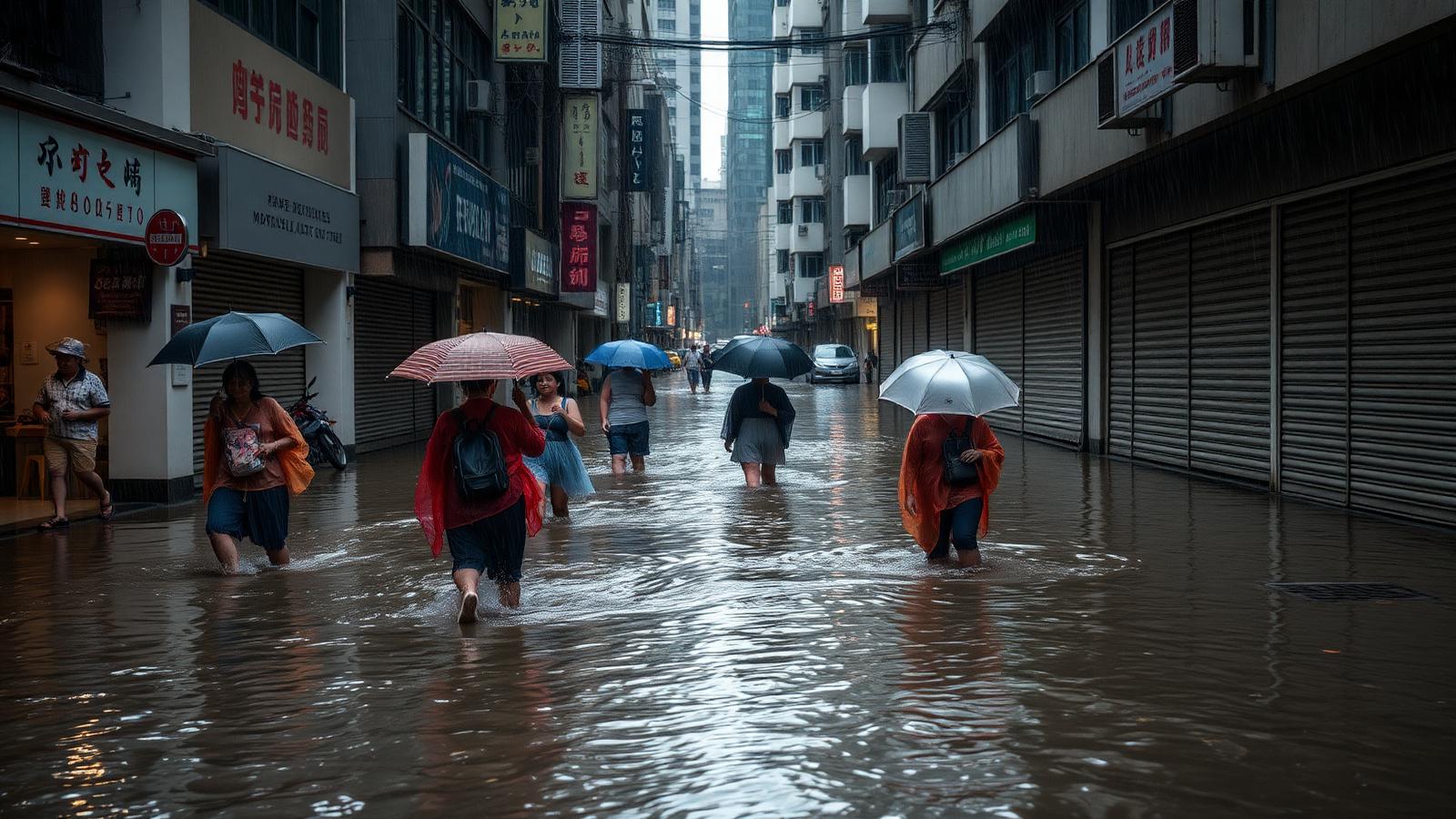
Heavy rain warnings extended to Shandong, Henan, Hubei, Anhui, Jiangsu, Zhejiang and Shanghai. Tourist sites closed, including parts of Disneyland and Legoland and viewing platforms along the Bund. State media showed ground-floor businesses flooded in Shanghai's former French Concession, with people wading through ankle-deep water. Authorities in Hangzhou waived all public parking fees so drivers could shelter their vehicles. In Fujian, maritime authorities suspended dozens of ferry routes and halted more than 100 offshore construction projects.
State media reported that a nine-year-old boy from Wenling in Zhejiang is missing after being swept into the sea. Chinese officials had not reported confirmed casualties by Monday afternoon. Earlier in the storm's life, eight people died in the Philippines from heavy monsoon rains associated with Dolphin and preceding systems, with more than 7,000 people sheltering in evacuation centres nationwide, according to the Office of Civil Defence. In Okinawa, five elderly people suffered non-life-threatening injuries, three of them after falling in strong winds.
The 6,000km detail
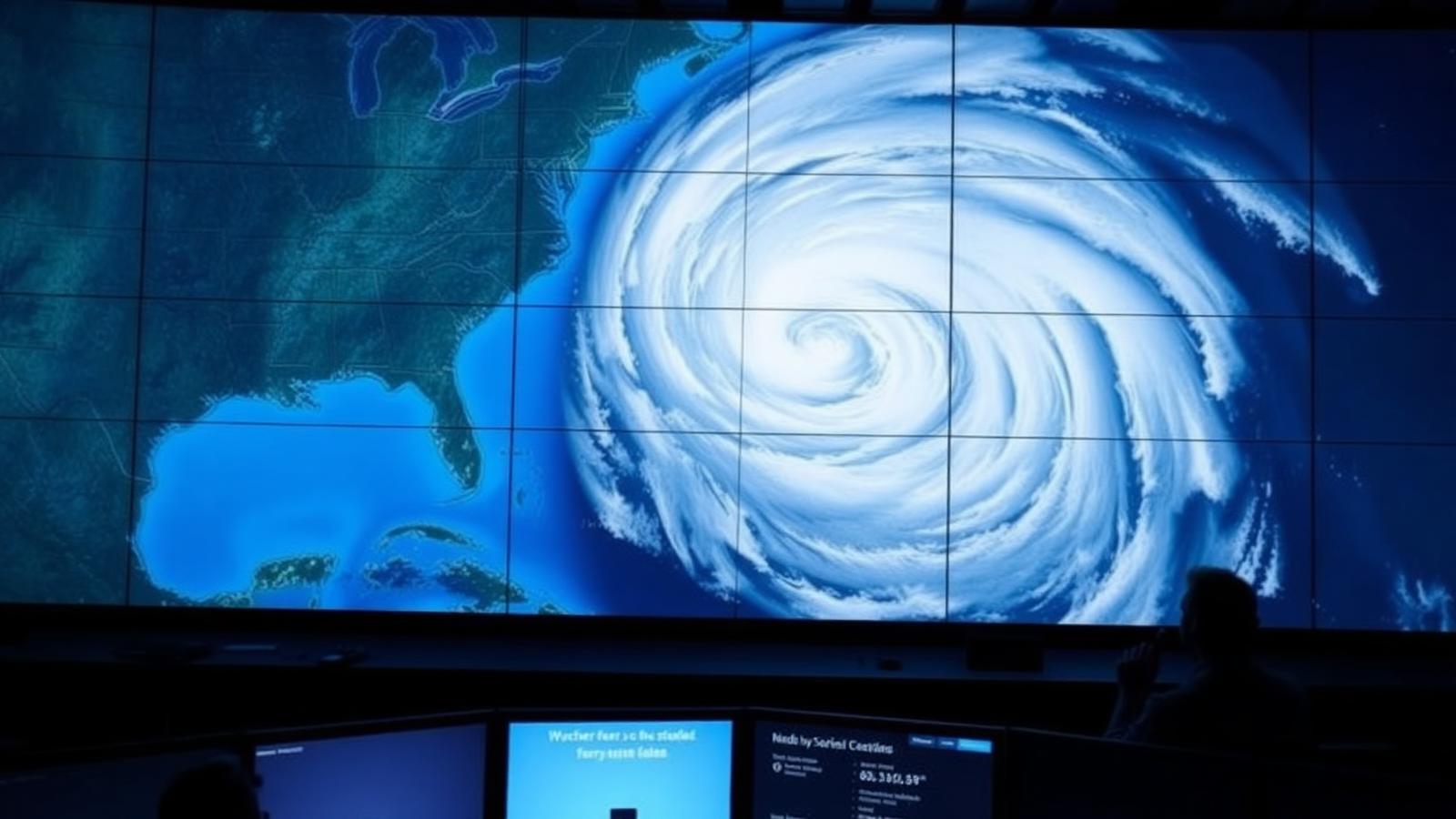
China's state broadcaster CCTV noted that Dolphin travelled around 6,000km before landfall, giving it a lifespan more than three times that of an average typhoon, alongside an unusually large circulation and intense rainfall capacity.
That combination — long-lived, wide, wet — is precisely what warm water enables. A typhoon dies when it runs out of energy: cold water beneath it, dry air around it, or land under it. When sea surface temperatures are elevated across an entire basin, the first of those brakes weakens along the whole track. The storm does not need to be a record-breaker in peak wind speed to be a record-breaker in accumulated damage, because duration and rainfall volume, not maximum gust, drive most flood losses.
This is the shift that emergency planners have been warning about: intensity records are eye-catching, but the operationally difficult trend is storms that stay dangerous for longer over more populated ground.
El Niño on top of a warming baseline
El Niño is a natural Pacific pattern in which warm surface water shifts eastward, redistributing heat and rainfall globally. It is not caused by climate change. But when it lands on top of an already elevated baseline, it produces temperature spikes and extreme weather that neither factor would generate alone.
Copernicus reported that El Niño conditions are developing and forecast to strengthen in coming months. Experts also note that strong El Niño years tend to produce more intense typhoons in the western Pacific, where the season typically runs from May to October.
The practical consequence is a loaded forecast for the rest of 2026: a warm ocean baseline, a strengthening El Niño, and a typhoon season with two and a half months still to run. That is the combination that turns a bad month into a bad year.
The other side of the same coin: Europe's drought
While eastern China evacuated from too much water, western Europe was managing too little. Prolonged hot and dry conditions fuelled extreme wildfires across the region. The Rhine has fallen to record low levels, straining one of the continent's most important freight arteries. The UK is braced for its fifth heatwave of the year, with dry weather putting further pressure on water supplies and more areas facing formal drought declaration.
These are not separate stories. Both are downstream of the same energy imbalance: more heat in the system means more evaporation, more atmospheric moisture, and a sharper divide between places where that moisture falls and places where it does not. The technical shorthand is that a warmer atmosphere holds roughly 7% more water vapour per degree of warming — which loads both ends of the distribution at once.

What warm oceans cost, in practical terms
The economics of ocean heat are easy to underrate because the costs arrive indirectly.
Insurance and reinsurance. Longer-lived, wetter storms shift loss models. Flood risk is the hardest peril to price because it is highly local, and the reprice usually appears as withdrawal of cover rather than a headline premium increase.
Shipping and inland freight. Ferry suspensions in Fujian and offshore construction halts are short-term; the Rhine's record lows are structural. Both push freight onto rail and road at higher cost.
Fisheries and food. Species migration alters catch composition and the value of fishing rights, with knock-on effects on protein prices in coastal economies.
Public health. Marine heatwaves coincide with terrestrial ones, and heat is the most reliably lethal weather hazard in most countries. The UK's upgraded heat-health alerts this week are the operational face of that.
Infrastructure planning. Drainage systems sized against twentieth-century rainfall statistics increasingly fail against twenty-first-century downpours. Shanghai's flooded ground-floor businesses in a heavily engineered city make the point.
Misinformation is now part of the disaster response
One of the more revealing details from China this week is that authorities detained two men for spreading false storm content. A 60-year-old man created a fake AI video claiming someone had fallen from a building in Shanghai during the storm. A 32-year-old had re-edited other users' storm footage in a way officials deemed misleading.
Extreme weather is now a reliable generator of synthetic media, because the visual grammar of a disaster — dark skies, water, wind, chaos — is easy for generative models to produce convincingly and hard for viewers to verify. That has operational consequences: emergency services spend capacity debunking, and genuine warnings compete for attention with fabrications.
The same dynamic runs through every fast-moving story where visual evidence carries weight, from conflict footage to scientific claims — a problem we examined from a different angle in our reporting on AI-designed viruses and the verification problem in biology.

What to watch over the coming weeks
- Dolphin's inland track. Rainfall totals in Shandong, Henan and Anhui through Wednesday will determine whether flood and landslide losses exceed coastal wind damage.
- The missing child in Wenling. Search outcomes and any revision to official casualty figures.
- August sea surface temperatures. Whether the July record is a peak or a step in a continuing climb.
- El Niño strengthening. Forecast updates will shape expectations for the remainder of the typhoon season.
- European water restrictions. Additional formal drought declarations in the UK and further Rhine navigation limits.
- Marine heatwave persistence in the western Mediterranean, which drives both ecosystem stress and hot nights on land.
Frequently asked questions
How hot were the oceans in July 2026? The average non-polar sea surface temperature was 20.96C, beating the previous July record of 20.89C set in 2023.
Does warm water make typhoons stronger? It raises the ceiling on intensity and, importantly, allows storms to survive longer over more distance — which drives rainfall and flood damage.
How many people were evacuated for Typhoon Dolphin? More than one million across eastern China, including about 900,000 in Wenzhou and 390,000 in Taizhou.
Is El Niño the cause of the record? It is a contributing factor layered on top of long-term human-driven warming. Copernicus attributes the record to both.
Why is Europe in drought while China floods? A warmer atmosphere holds more moisture, intensifying both wet and dry extremes depending on where pressure systems sit.
Where can I check the underlying data? Copernicus publishes monthly climate bulletins and anomaly maps publicly, and the World Meteorological Organization issues complementary assessments.
Protunez covers the climate and extreme-weather beat as an ongoing story rather than a seasonal one. Related reading: the AI data centre boom colliding with the world's power grids and how AI-assisted research is rewriting medicine.