SpaceX spent more money in three months than it has ever earned in a year — and told Wall Street to be pleased about it.
Wall Street was not pleased. In the company's first earnings report since its June initial public offering, SpaceX disclosed capital expenditure of $18.4bn for the April–June quarter, a more than sixfold jump from a year earlier and comfortably more than double the $7.8bn of revenue it booked in the same period. Analysts had penciled in roughly $13.2bn. The stock fell as much as 13.6% on Wednesday, closing beneath its $135 IPO price and far below the intraday high above $200 it touched days after listing on 12 June.
The revenue line, by any conventional reading, was excellent: up 92% year on year, ahead of estimates, with Starlink contributing $1.6bn of profit in the quarter. The company still posted a net loss of $143m for the three months and roughly $2bn across the first half of the year.
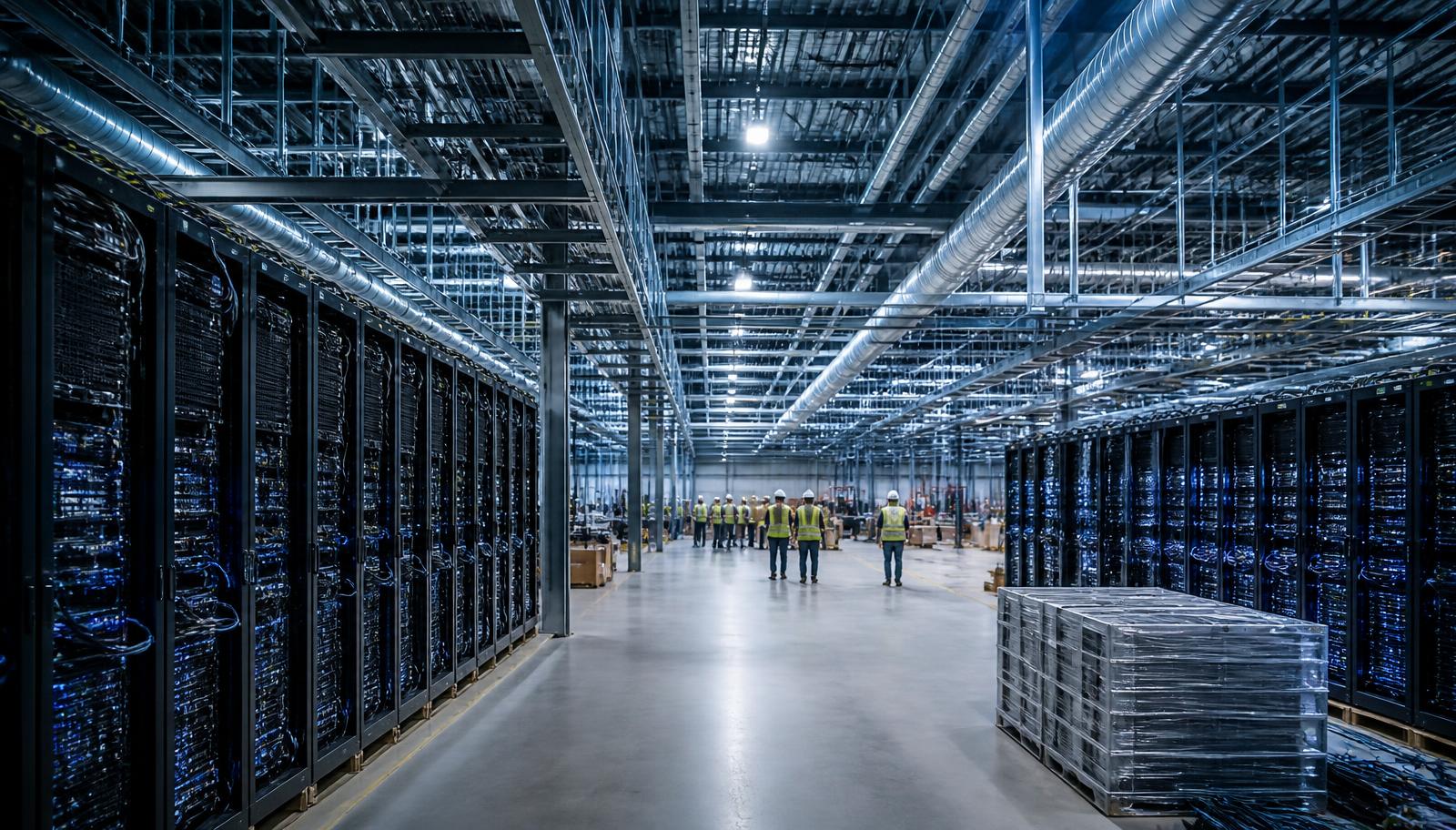
Investors did not react to the loss. They reacted to the sentence that explained it: well over 80% of that record capital expenditure went into artificial intelligence.
What SpaceX actually reported
Strip the narrative away and the numbers tell a clean story of a company in the middle of a deliberate, enormous, self-inflicted cash burn.
| Metric | Q2 2026 | Change vs Q2 2025 |
|---|---|---|
| Revenue | $7.8bn | +92% |
| Capital expenditure | $18.4bn | roughly +6x |
| Net result | −$143m | Loss |
| Starlink segment profit | $1.6bn | Profitable |
| First-half net result | roughly −$2bn | Loss |
Two things jump out. First, capex at 236% of revenue is not a large investment programme; it is a different company being built inside the old one. Second, the only unambiguously profitable unit is Starlink — the satellite broadband business — which means the launch business, the X social platform and the AI buildout are all being financed by the dish on somebody's roof.
Chief financial officer Bret Johnsen offered the counter-argument on the investor call: in the opening weeks of the current quarter, SpaceX had already contracted an additional $6.7bn of cloud services revenue that "begins ramping starting in October". Executives argued the AI investment pays itself back inside twelve months, as reported by CNBC.
Elon Musk went further, telling investors people were "underestimating" SpaceX and pulling forward his target for $1 trillion in annual revenue to 2030 from a previous 2031.
Why the market flinched anyway
Three separate anxieties collided in the same trading session, and it is worth separating them because they have different resolutions.
Anxiety one: SpaceX is late to its own new business. The company's AI models are widely regarded as behind those of OpenAI, Anthropic and Google. Its pivot is therefore not primarily about models but about compute — renting out capacity built with Nvidia hardware, which puts it in direct competition with Microsoft Azure, Amazon Web Services and Google Cloud. Those are three of the best-capitalised operators in corporate history, all of whom started earlier.
Anxiety two: the wider AI-payback question. This earnings season has been unkind to companies asking for patience on AI capex. Investors have spent eighteen months funding buildouts on the promise of future returns, and the tolerance for "trust the roadmap" has visibly thinned. SpaceX walked into that mood carrying the largest capex surprise of the quarter.
Anxiety three: the IPO overhang. A stock that traded above $200 in June and closed near $125 in August has already disappointed a cohort of buyers. CNN Business noted the company has shed around $1 trillion in value since its debut, which reframes every subsequent disclosure as evidence in an ongoing argument about whether the listing was priced on rockets or on hope.
The Starlink paradox
The most interesting number in the report is the least discussed: Starlink's $1.6bn quarterly profit.
Starlink is the boring part of SpaceX. It sells internet access to households, ships, aircraft and remote industrial sites. It has physical infrastructure, recurring subscription revenue, real pricing power in underserved markets, and a competitive moat made of launch capacity that rivals cannot easily rent. It is, in short, the closest thing in the portfolio to a utility.
And it is currently subsidising a speculative pivot into the most capital-intensive, most crowded technology market on earth.
There is a coherent strategic case for this. Satellite constellations generate enormous telemetry and imaging data; ground-station networks are already distributed globally; power and cooling are the binding constraints on AI compute, and an aerospace company has genuine expertise in thermal engineering and industrial-scale power management. Musk's argument is that SpaceX is not entering the cloud market as a software company but as an infrastructure company — the discipline it actually has.
There is an equally coherent bear case: none of that expertise addresses the two things that decide cloud contracts, which are enterprise sales relationships and switching costs. Those take years to build and cannot be manufactured with capex.

What $18.4bn a quarter actually buys
It helps to make the abstraction concrete. Capital expenditure at this scale, concentrated in AI, breaks into a handful of physical realities:
- Accelerator hardware. Nvidia-class GPU clusters at the tens-of-thousands unit scale, purchased into a supply chain where lead times are still the binding constraint rather than price.
- Land, shells and power. Data centre sites are chosen for grid interconnection first and geography second. Securing multi-hundred-megawatt interconnects is now a multi-year procurement exercise in most developed markets.
- Cooling and electrical plant. The unglamorous majority of a modern AI facility's cost — substations, switchgear, liquid cooling loops, backup generation.
- Network fabric. High-bandwidth interconnect between racks, which increasingly determines effective training throughput more than raw chip count.
The reason this matters for the payback debate is that only the first category depreciates on a short cycle. Grid connections, buildings and electrical plant are long-lived assets. If the compute demand shows up, the fixed infrastructure looks like a bargain; if it does not, it looks like a stranded asset with a thirty-year lease.
Which is why the $6.7bn of newly contracted cloud revenue is the single most load-bearing disclosure in the whole report. It is the only forward-looking evidence that demand exists at the scale the spending assumes.
The tariff dimension
There is a second-order pressure on this buildout that did not feature on the earnings call but should have: input costs.
Washington's newly imposed 15% tariff on polysilicon — the grey powder at the base of both the solar and semiconductor supply chains — raises the cost floor for exactly the kind of energy-and-silicon-intensive infrastructure SpaceX is racing to build. We examined the mechanics of that measure in our analysis of the polysilicon tariff and the US-China chip war.
The arithmetic is unforgiving. AI data centres need power, and the cheapest marginal power available at scale in the United States is currently solar. Tariff the material that solar panels are made from and you raise the long-run cost of the electricity that AI compute consumes. A company spending $18.4bn a quarter on compute is, whether it says so or not, taking a large position on the future price of American electricity.
Meanwhile the administration has agreed to pay a German developer $1.2bn to halt US wind projects — a policy signal pointing the same direction. For anyone modelling AI infrastructure returns, energy policy has stopped being background noise and become a line item. Our Business & Economy and Technology sections track both threads.
Three tests for the next two quarters
Rather than relitigate the valuation, here are the observable facts that will settle the argument.
Test one: does the October cloud ramp materialise? SpaceX has named a number ($6.7bn contracted) and a date (ramping from October). Contracted revenue that converts on schedule validates the payback thesis; slippage does not merely delay it, it undermines the credibility of the forward guidance that supports the entire capex programme.
Test two: does capex stabilise or keep climbing? A one-quarter spike at $18.4bn is a buildout. A repeated $18bn quarter alongside a continuing net loss is a structural cash-burn profile that will eventually require external financing — and financing on worse terms than a $135 IPO.
Test three: does Starlink's margin hold? Everything else in this story is funded by satellite broadband. If Starlink's profitability compresses — through competition, pricing pressure, or capital being diverted from constellation replenishment into GPUs — the internal subsidy that makes the AI bet survivable weakens.
How this compares with the rest of the AI buildout
Context makes the number legible. Across the hyperscalers, quarterly capital expenditure in the AI era has climbed from single-digit billions to the high teens, and every one of those companies funds it from a mature, high-margin cash engine: enterprise software, advertising, or retail and cloud combined. SpaceX is attempting a comparable buildout from a revenue base under $8bn a quarter and a group-level loss.
That is the structural difference the market priced on Wednesday. It is not that investors doubt AI compute demand exists; it is that SpaceX's spending-to-revenue ratio leaves far less margin for a demand air pocket. A hyperscaler that overbuilds absorbs the depreciation. A company spending 236% of revenue on capex has to either grow into the asset base very quickly or refinance.
There is also a governance dimension. SpaceX went public in June, which means a capex programme of this magnitude now requires quarterly explanation to shareholders who did not sign up for a venture-stage risk profile. Musk's response — pulling the $1 trillion revenue target forward a year — is the classic answer to that pressure: raise the terminal value to justify the interim burn. It works only as long as the intermediate milestones land.
Watch the composition of spending too. If future quarters shift the mix from accelerator purchases toward power and property, that signals a company building a durable infrastructure position. If the mix stays dominated by short-lived hardware, the depreciation schedule will start doing visible damage to reported earnings from 2027 onward, regardless of how much cloud revenue arrives.
Frequently asked questions
Why did SpaceX shares fall if revenue beat expectations? Because the market's concern was spending, not sales. Capital expenditure of $18.4bn came in well above the roughly $13.2bn analysts expected and exceeded quarterly revenue by more than two times, raising questions about how long the cash burn continues.
Is SpaceX profitable? Not at group level. It reported a net loss of $143m for the second quarter and around $2bn for the first half of 2026. The Starlink satellite broadband segment is profitable, contributing $1.6bn in the quarter.
What is SpaceX's AI strategy? Primarily selling compute capacity rather than competing on frontier models. The company is building Nvidia-based infrastructure and renting it out, positioning itself as an alternative to Microsoft, Amazon and Google cloud offerings.
How does this connect to the polysilicon tariff? AI data centres are energy-intensive, and tariffs on polysilicon raise the cost of solar generation — one of the cheapest sources of new US electricity at scale. Higher long-run power costs squeeze the returns on compute-heavy infrastructure.
When does SpaceX expect the investment to pay off? Executives told investors the AI spending recoups itself within about a year, citing $6.7bn of cloud services revenue contracted in the current quarter that begins ramping in October.
Bottom line
SpaceX has done something unusual: it has made the boring business — satellite broadband — pay for the exciting one, and asked public shareholders to underwrite the gap. The revenue growth is real, the Starlink profit is real, and the $6.7bn of contracted cloud work is real. So is $18.4bn of quarterly spending in a market where three better-capitalised incumbents already own the customer relationships.
October is the deadline the company set for itself. Investors will be counting.
For continuing coverage of AI infrastructure economics and market reaction, see Business & Economy and Technology.